Reading a design portfolio: what project photos can and cannot tell you
How to read interior design photos in Singapore: the craft details a photograph really shows, what it structurally hides, and which records to check instead.
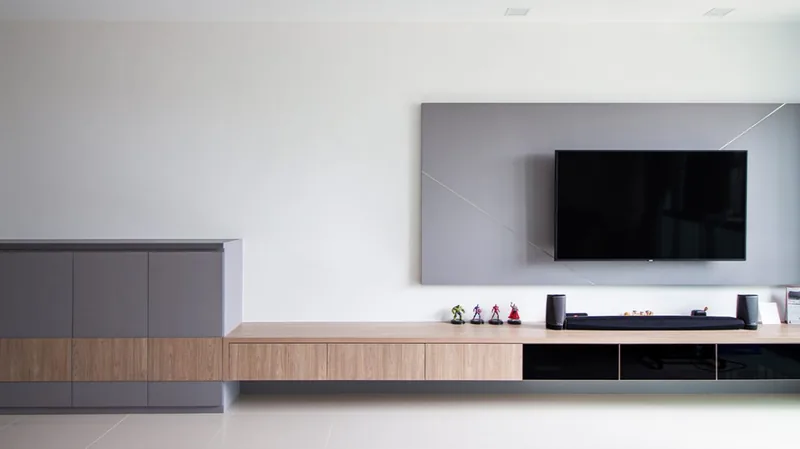
A portfolio photograph is one styled moment in one room, usually shot on a wide lens after the site was cleared, dressed and lit for the camera. Photos can honestly show craft — reveal widths, grain alignment, junction details, switch coordination and lighting quality — but they cannot show waterproofing, wiring, permits, who actually built the work, what it cost, or how it looked a year later. Verify the firm rather than the image: HDB publishes its Directory of Renovation Contractors as an open dataset on data.gov.sg, and a query of that dataset on 10 August 2026 returned 2,708 registered businesses.
- What a project photo can genuinely tell you
- What a photograph structurally cannot tell you
- Renders, virtual staging and images that belong to someone else
- Six questions that turn a photo into evidence
- How to verify the firm behind the photographs
- What to ask to see instead of more photographs
- The rule, in the regulator's own words
Interior design photos Singapore firms publish are the most persuasive and least verifiable part of any pitch. A portfolio image is one styled moment, in one room, usually shot on a wide lens after the site was cleared, dressed, and lit for the camera. Read properly it still carries real information about craft — and it structurally cannot carry information about the things that decide whether a renovation goes well.
What a project photo can genuinely tell you
Craft is visible, and it is visible in the boring parts of the frame. Look at reveal and shadow-gap widths where joinery meets a wall: consistent gaps across a long run mean the carpenter set out from a datum, while gaps that taper mean the run was fitted to an out-of-square wall by eye.
Grain and pattern discipline shows intent. Veneer or laminate that continues across adjacent door fronts, tile grout lines that align through an internal corner, and a stone joint placed where a cabinet division falls are all decisions someone made on paper before ordering material.
Junctions tell you who is being careful. Watch how the ceiling meets the curtain pelmet, how skirting turns a corner, how a countertop meets a wall that is never straight, and how the joinery resolves against a beam, a duct or the household shelter door — the shelter is in almost every flat, and hiding it well is a genuine skill.
Electrical coordination is usually visible too. Switch plates and sockets that align to the joinery grid rather than floating at random heights indicate that the electrician worked to a drawing rather than to habit.
Lighting quality reads through the photograph. Consistent colour temperature across a room, no visible dot-shadowing from a cheap strip, and light placed to wash a surface rather than to glare into the lens are all reasonable inferences from a single image.
What a photograph structurally cannot tell you
Nothing behind a finished surface appears in a photograph. Waterproofing membrane and its upturn, screed thickness, pipe falls, cable routing, board grade inside a carcass and the fixings holding a false ceiling are all invisible the moment the last coat goes on, and every one of them is a more expensive failure than a wonky mitre.
Compliance never photographs. Whether a permit was obtained before walls were hacked does not appear in the frame, and HDB requires a permit before hacking walls in a flat (My Nice Home, HDB), with a Professional Engineer for Civil or Structural works required to supervise the demolition of non-load bearing reinforced concrete elements (HDB). A beautiful open-plan photo is equally consistent with a properly permitted job and an unpermitted one.
Trade eligibility is also invisible. HDB states plainly that "You must engage a Building and Construction Authority (BCA) approved window contractor listed in HDB's directory for all window installation/ replacement work." (HDB), and a full-height window in a portfolio image gives no clue whether that requirement was met.
Authorship is frequently unclear. The firm publishing an image may have designed it, built it, subcontracted it, project-managed it, or bought the styling shoot for a project it partly touched — and photo credits in this industry are rarely granular enough to tell.
Time is the biggest omission. Portfolio photography happens around handover, before the family moves in and before a single wet season has passed, so it cannot show cracking, sagging, swelling, delamination or a seal that failed months later. CaseTrust-accredited renovation businesses must provide homeowners a workmanship warranty for a period of 12 months from the completion date of the works (CASE), which is the period a homeowner has to find and report those faults under that scheme.
Cost is absent by design. Two visually identical kitchens can differ enormously in carcass board, hinge grade, worktop material and site supervision, so the only meaningful figure comes from a quotation written against your flat.
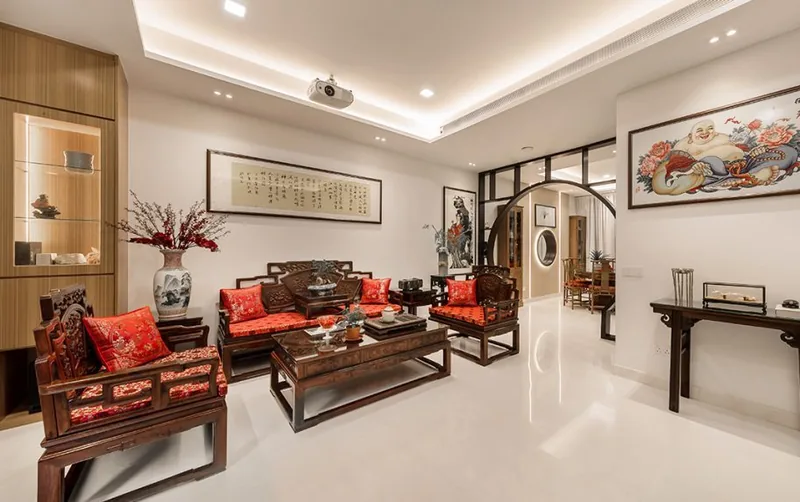
Renders, virtual staging and images that belong to someone else
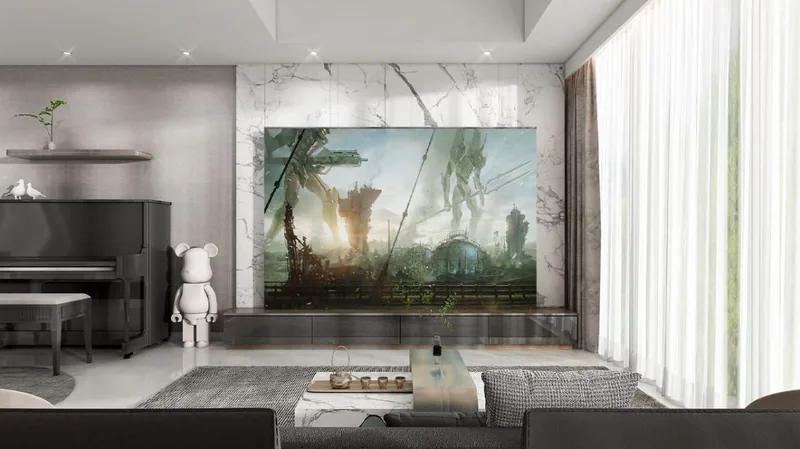
Renders have tells once you look for them. Impossibly clean reflections, repeated identical plants or artwork, perfect symmetry, missing switches, sockets, air-conditioner units and window grilles, and corners with no dust or shadow are all signs that nobody has ever stood in that room.
Asking is faster than detecting. A direct question — is this a photograph of a completed project, a render, or a photograph with virtually staged furniture — is reasonable, and an honest answer costs a good firm nothing.
Misrepresentation is regulated rather than merely rude. The Consumer Protection (Fair Trading) Act 2003 makes it an unfair practice for a supplier "to do or say anything, or omit to do or say anything, if as a result a consumer might reasonably be deceived or misled" and separately lists as a specific unfair practice "Representing that goods or services have sponsorship, approval, performance characteristics, accessories, ingredients, components, qualities, uses or benefits that they do not have" (Singapore Statutes Online). The Singapore Code of Advertising Practice, administered by the Advertising Standards Authority of Singapore, which sits c/o the Consumers Association of Singapore, sets the baseline that all advertisements should be "legal. decent. honest. and truthful" (ASAS).
Six questions that turn a photo into evidence
Which estate, block type and flat type is this, and was it a BTO, a resale flat or a condominium? Layout constraints differ so much between them that a stunning condominium kitchen tells you little about a 3-room HDB galley.
When was it photographed, and when was it handed over? A gap of a few days is normal; a portfolio with no dates at all is a choice.
Who ran this site, and does that person still work here? Renovation quality tracks the project manager and the regular sub-trades far more closely than it tracks the brand.
What was actually in the firm's scope? Cases where the kitchen, the windows or the aircon were supplied by other parties are common and unremarkable, but they change what the photo is evidence of.
What is just outside the frame? Ask for the wide shot of the same room, and for the photo of the service yard, the shelter door and the electrical distribution board.
Can this project be seen again now? A firm with a good relationship and nothing to hide can usually arrange a viewing of an occupied home a year or two after handover, which is the only version of the image that includes time.
How to verify the firm behind the photographs
Records beat impressions, and the relevant ones are free. HDB publishes its Directory of Renovation Contractors as an open dataset on data.gov.sg; a query of that dataset on 10 August 2026 returned 2,708 registered businesses, each record carrying the UEN, directory reference number, company name, address, postal code, email address and contact number (data.gov.sg). Matching the UEN printed on a quotation against that dataset takes under a minute and defeats most brand-name confusion.
Registration is not a recommendation. HDB also operates a Demerit Points System under which a registered renovation contractor that receives a total of at least 24 demerit points within 24 months is delisted from the Directory (HDB), and CASE recorded 787 complaints against renovation businesses in 2025, down 18.2% from 962 in 2024 (CASE).
Noble Interior Design Pte. Ltd. is listed in HDB's Directory of Renovation Contractors (DRC Ref: HB-12-5230A, UEN 201722629H) and is CaseTrust-accredited.
Knowing the remedy in advance changes how carefully the paperwork is read. The Small Claims Tribunals Act 1984 defines the prescribed limit as $20,000 and a prescribed extended limit of $30,000, the higher figure applying only where the parties agree by a memorandum signed by them (Singapore Statutes Online), which is a small fraction of many renovation budgets.
What to ask to see instead of more photographs
Ask for an itemised quotation naming brands, thicknesses and grades, because a photograph of a countertop and the line "solid surface top" are equally uninformative. Ask for the payment milestone schedule, noting that CaseTrust caps initial deposits at a maximum 20% of the total cost and requires a deposit performance bond (CASE).
Ask for a defect list from a recent handover, with dates showing when each item was closed. A firm that produces one is showing you something no portfolio can, and a firm that claims never to have had a defect is telling you it does not record them.
Are portfolio photos edited or staged?
Almost all professional interior photography is styled, lit and colour-corrected, and that is normal practice rather than deception. The line worth policing is factual: whether the image is a photograph of built work at all, and whether the firm shown actually did the work.
Should I trust a firm with only a handful of project photos?
Volume is a weak signal in both directions. A short portfolio can mean a young practice, a small team that photographs selectively, or a contractor whose clients decline shoots — the informative move is asking to see paperwork and a completed home rather than counting images.
The rule, in the regulator's own words
The contractors listed in the DRC are aware of the HDB's requirements when they carry out renovations and to protect the structural integrity of the building. HDB does not endorse nor guarantee the quality of their works.
Engaging these contractors is a private contract between you and the contractors, and HDB is not privy to it. The contractors are fully responsible for the contractual obligations towards their client, including the quality of their works.
— HDB, Looking for Renovation Contractors
The passage above is quoted from HDB's page on looking for renovation contractors. No public body vouches for the work in a portfolio image, which is exactly why the quotation, the records and a visit to a finished home carry more weight than the photograph does.
- HDB — Directory of Renovation Contractors open dataset (data.gov.sg)
- HDB — Looking for renovation contractors
- HDB — Directory of Renovation Contractors
- HDB — Renovation guidelines for window works
- HDB — Renovation guidelines for building works
- My Nice Home (HDB) — HDB renovation guide
- CASE — CaseTrust accreditation for renovation businesses
- CASE media release, February 2026 — 2025 complaint statistics
- Consumer Protection (Fair Trading) Act 2003 — Singapore Statutes Online
- Small Claims Tribunals Act 1984 — Singapore Statutes Online
- Singapore Code of Advertising Practice — ASAS
Tell us the flat and when you get the keys.
You will get a written quotation with every line spelled out. Take it and compare it with anyone.
Get a quote