Renovation rates in Singapore: why two quotations for the same flat differ
Per foot run, per point and per square foot describe quantities, not specifications — here is what actually differs between two renovation quotations for the same flat.
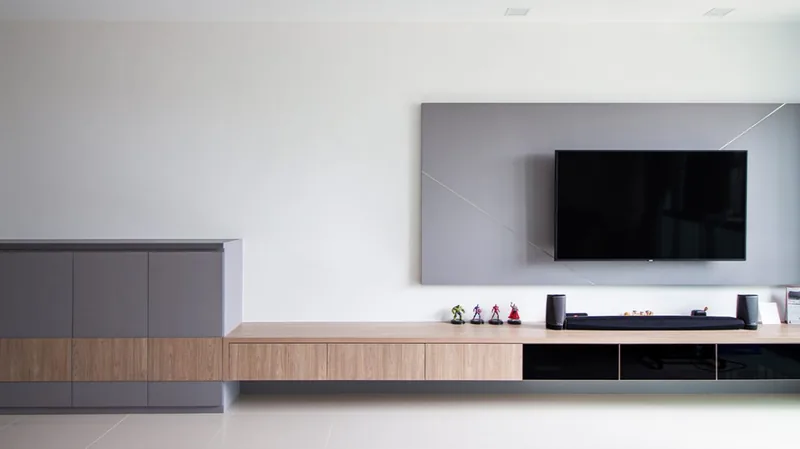
Two quotations for the same flat differ mainly because they are not pricing the same work: different carpentry substrates and hardware, different depth of hacking and waterproofing, different treatment of provisional sums, and different exclusions. Renovation rates in Singapore are quoted per foot run, per square foot and per point, and none of those units defines the material or the preparation behind it. Normalise both documents line by line before comparing totals, because a lower total is only cheaper if it describes the same job.
- What renovation rates in Singapore actually price
- Carpentry: the same foot run, four different boxes
- Wet works: what sits under the tile decides the price
- Provisional sums and the lines that are not there
- What a higher price sometimes buys: the contract, not the cabinet
- When the cheapest quotation is the right one
- Comparing two quotations in an hour
Two firms quote the same 4-room flat and the totals differ by an amount that makes no sense until both documents are read line by line. Renovation rates in Singapore are published in three units — per foot run for carpentry, per square foot for tiling and flooring, per point for electrical — and none of those units says anything about the material, the hardware, or the depth of preparation behind the number. A gap between two quotations is almost always a gap in specification and in what has been left out, not evidence that one firm is greedy and the other generous.
What renovation rates in Singapore actually price
A unit price means nothing until the deliverable behind it is defined. "Per foot run" describes a length of cabinetry; it says nothing about carcass thickness, hinge grade, or whether the interior is laminated. "Per point" describes an outlet, but one firm counts a point as a new conduit chased into the wall, new cable run back to the distribution board, and a faceplate, while another counts swapping a faceplate on an existing circuit. Ask each firm to define its units in writing before comparing any totals, because the answers usually explain most of the difference.
CaseTrust treats that breakdown as an accreditation requirement rather than a courtesy:
"Businesses are required to display pricing breakdowns clearly and communicate additional costs." — CASE, *What Can Consumers Expect from a CaseTrust Accredited Renovation Contractor?*
CaseTrust applies the same rule to changes made after signing, requiring that variations be agreed in writing between the business and the consumer before any works (CASE).
Carpentry: the same foot run, four different boxes
Substrate is the first fork in the road. Moisture-resistant plywood, blockboard, MDF and particle board all accept the same laminate and look identical on handover day, and they behave completely differently at a sink base, under a hob, or inside a wardrobe against an external wall that never gets airflow. MDF machines cleanly and paints beautifully for door fronts, and it swells irreversibly once water reaches the core. Plywood belongs in the wet zones.
Carcass construction is the second fork, and a homeowner can check all of it with a torch. Ask whether the box has its own back panel or uses the wall as a back, whether the interior is laminated or left raw, how thick the shelves are and how far they span unsupported, and how the edges are finished — a heat-glued PVC edge on a wet-zone door lifts at the corner within a couple of years, while a laser-applied or ABS edge with a clean glue line does not.
Hardware is the third fork, and it is testable in a showroom in about ninety seconds. Pull a drawer to full extension and release it: a soft-close undermount runner returns silently and stays parallel, while a cheap side-mount roller drops the last part of its travel and racks under load. Hinges take the same test. Hardware brand, series and load rating rarely appear on a quotation unless a homeowner asks for them to be written in.
Measurement convention is the fourth fork and the sneakiest. Confirm whether upper and lower cabinets are measured as separate runs, whether the rate changes above a given carcass height, whether a tall unit is counted once or twice, and whether the run is priced up to the ceiling or stops at a standard height and leaves a dust shelf above it.

Wet works: what sits under the tile decides the price
Hacking is priced by what comes off and by where it goes. Stripping wall and floor finishes in a bathroom, removing sanitary ware, and carting debris down through a service lift is labour plus disposal volume, and disposal volume is the line most often missing from a thin quotation. Ask how debris leaves the building, who pays the town council or management corporation deposit, and who installs the corridor and lift protection.
Waterproofing separates a real quotation from a short one. A properly rebuilt bathroom floor has the old membrane taken out with the screed, a new membrane applied and turned up the wall behind the tile line, a ponding test with the trap sealed and standing water left in place before any screed returns, and a screed laid to a consistent fall so water reaches the trap from every corner. Ask to see the ponding test — dated photographs, or an invitation to site — because it is the one stage that cannot be inspected after tiling.
Programme is priced too, and the rules cap how fast the noisy part can go. HDB allows general renovations such as plastering and laying of floor screed from 9am to 6pm Monday to Saturday and not on Sundays or public holidays, and allows noisy renovations such as demolishing walls and removing wall or floor finishes only from 9am to 5pm Monday to Friday (HDB renovation guide, MyNiceHome). A quotation whose programme compresses hacking into a weekend is pricing work that cannot lawfully be done.
Newly completed flats carry a further constraint that no quotation can price around:
"If you have a newly built BTO flat, you will have to wait 3 years before removing any wall or floor finishes in the toilets. This is to prevent damage to the waterproofing in these wet areas." — HDB renovation guide, MyNiceHome
Provisional sums and the lines that are not there
A provisional sum is an honest placeholder for work that cannot be measured yet — an unknown slab condition, a riser that may need rerouting, tiles that may delaminate when the first row comes off. A provisional sum is also the easiest way to make a total look small. Count them, add them up, ask what happens to the balance if the actual cost lands lower, and ask what evidence will be produced to justify the final figure.
Exclusions do the same job more quietly. Read both documents for the absence of hacking and disposal, protection of existing finishes, hoisting of oversized slabs, plumbing diversions, temporary water and power, permit application, reinstatement of common property, and the final cleaning. A quotation that omits six of those items is not cheaper; it is shorter.
Variations are where a low quotation recovers its margin, which is why the written-variation rule matters commercially and not only contractually. CaseTrust requires accredited businesses to agree variations in writing with the homeowner before any works, so every increase becomes a decision made with a number in front of it.

What a higher price sometimes buys: the contract, not the cabinet
Accreditation is a bundle of contractual obligations with money standing behind them. CaseTrust caps the initial deposit at a maximum of 20% of the total cost, requires a deposit performance bond to safeguard deposit payments against closure, winding up and liquidation, and requires that "Businesses shall provide Homeowners a workmanship warranty for a period of 12 months from completion date of the Works" (CASE).
CASE complaint data shows what accreditation obligations are worth. CASE reported that approximately 97% of the 962 renovation complaints it received in 2024 were against non-CaseTrust-accredited contractors (CASE media release, February 2025), and in 2025 CASE received 787 renovation complaints while prepayment losses in the industry came to S$190,667, the second-highest of any industry (CASE media release, February 2026).
Being listed by HDB is a legal minimum rather than a quality rating. HDB runs a demerit point system under which a registered renovation contractor accumulating at least 24 demerit points within 24 months is delisted from the Directory of Renovation Contractors (HDB), and HDB states that it does not endorse or guarantee the quality of works of contractors in that Directory (HDB). The Directory is an open dataset, so any firm can be checked by UEN or company name on data.gov.sg in about a minute.
When the cheapest quotation is the right one
A quotation can be cheap because the work is genuinely simple. Repainting, a vinyl overlay on a sound and level screed, replacing sanitary fittings without touching the membrane, and swapping doors on a solid carcass are low-risk items where a heavier specification buys very little. Put the money where failure is expensive and invisible — wet rooms, concealed services, the hardware opened every day — and take the lean price for everything else. A firm that cannot tell a client which of its own line items is worth downgrading has not read the flat properly.
Comparing two quotations in an hour
- Build one combined list of every item that appears on either document, then price the missing lines on both so the two totals describe the same job.
- Define the units in writing: what sits inside a point, a foot run, and a square foot of tiling.
- Ask whether each total is GST-inclusive, because a GST-registered firm and a non-registered one are not comparable on a bare figure.
- Count the provisional sums and the exclusions, and treat both as money likely to be spent.
- Check the deposit percentage, the payment milestones and the warranty period against the CaseTrust criteria before signing.
- Verify the UEN and the Directory listing on data.gov.sg before any money moves.
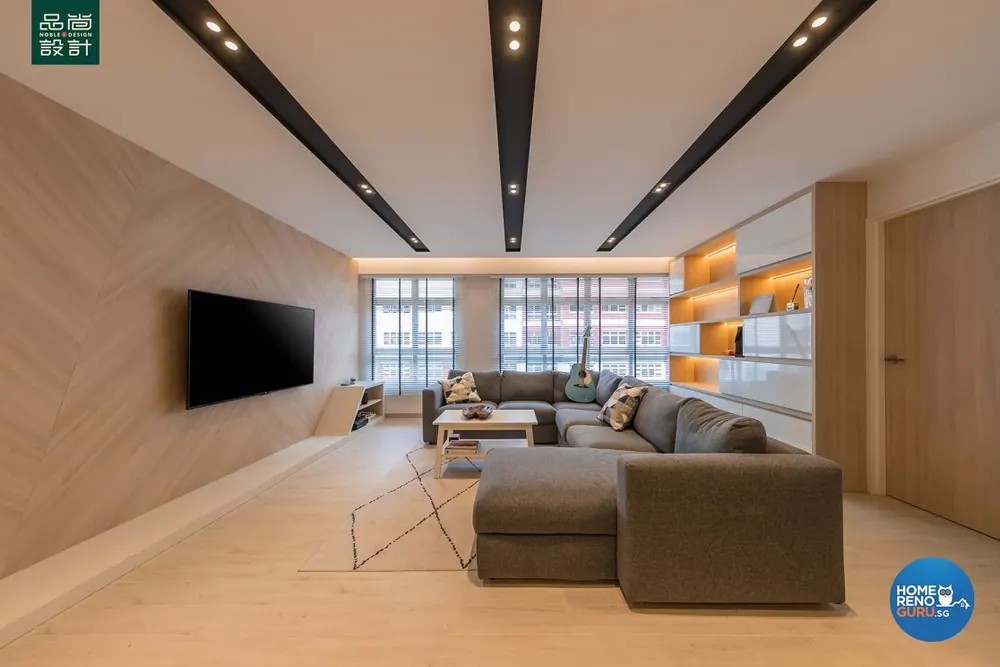
Noble Interior Design Pte. Ltd. is listed in HDB's Directory of Renovation Contractors (DRC Ref: HB-12-5230A, UEN 201722629H) and is CaseTrust-accredited.
- CASE — CaseTrust accreditation for renovation businesses
- CASE media release, February 2026 (2025 complaint and prepayment figures)
- CASE media release, February 2025 (2024 complaint figures)
- HDB renovation guide — MyNiceHome
- HDB — Directory of Renovation Contractors (demerit points)
- HDB — Looking for renovation contractors
- data.gov.sg — Directory of Renovation Contractors dataset
Tell us the flat and when you get the keys.
You will get a written quotation with every line spelled out. Take it and compare it with anyone.
Get a quote