Corporate and office interior design: how commercial fees differ from residential
Commercial fees carry a Qualified Person, SCDF submissions, a landlord's fit-out manual and reinstatement — and lose the consumer protections homeowners get. What actually changes, and why.
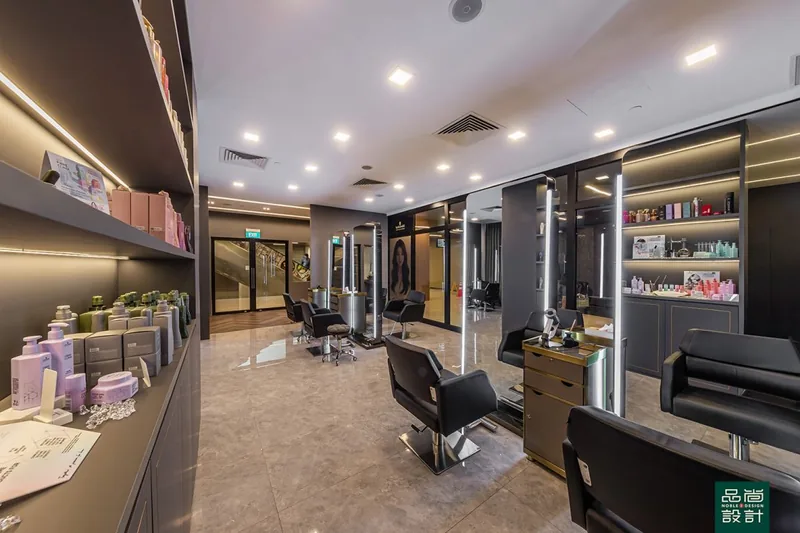
Commercial fees differ from residential fees in what they must cover rather than in size alone: SCDF fire safety submissions must be made by a Qualified Person, who under the Fire Safety Act 1993 is a registered architect or professional engineer holding a practising certificate in force, so that fee can never sit inside an interior designer's scope. A company also loses the homeowner protections — the Consumer Protection (Fair Trading) Act 2003 protects an individual acting otherwise than exclusively in the course of business, which a tenant company is not. Tax runs the other way, because a GST-registered tenant recovers input tax and may deduct qualifying renovation expenditure under section 14N of the Income Tax Act 1947. Landlord fit-out rules and lease-end reinstatement then set costs the designer does not control.
- The work a corporate fee has to cover that a residential fee does not
- Consumer protection stops at the office door
- Tax changes the real cost of a commercial fee
- The landlord is a third party to your fee
- Access, hours and phasing are fee drivers, not details
- How commercial fee structures are usually put together
- When a small office should buy the residential-style package
A commercial fee is not a residential fee with a bigger number on it. Corporate interior design in Singapore carries obligations a home renovation never touches: statutory submissions made by registered professionals, a landlord holding a contractual veto, tax treatment that changes the real cost of the fee, and the loss of the consumer protections homeowners get.
The work a corporate fee has to cover that a residential fee does not
Statutory submissions sit at the front of the difference. SCDF states the position plainly on its plans submission pages:
"Proposed fire safety works require SCDF's approval, with plans submitted by Qualified Persons (QPs) on behalf of building owners."
A Qualified Person is a statutory role rather than a job title: the Fire Safety Act 1993 defines a qualified person as a person registered as an architect under the Architects Act 1991, or as a professional engineer under the Professional Engineers Act 1991, in each case holding a practising certificate in force (Fire Safety Act 1993, section 2). Moving a sprinkler head, relocating a detector, changing an escape route or altering mechanical ventilation therefore generates a professional fee that no interior design firm can absorb into its own, because the firm cannot sign the submission.
Submission fees are published and fixed. The SCDF plan fee schedule sets $90 per storey for change of use or additions and alterations to existing fire safety works where floor area does not increase, the same $90 per storey for new or altered fire protection and mechanical ventilation works, and $160 for every 100 square metres (or part thereof) of floor area for new fire safety works containing a prescribed fire safety measure. Where works fall within the schedule of minor alterations or additions not requiring approval of plans, SCDF runs a lodgement scheme instead, stating that the Qualified Person shall make application through CORENET e-submission before commencement of the works and that the fee for each submission is $90 (SCDF, Minor Addition & Alteration Works).
Consumer protection stops at the office door
The accreditation and complaint machinery that homeowners rely on does not extend to a company signing a fit-out contract, and that is a statutory boundary rather than an oversight. The Consumer Protection (Fair Trading) Act 2003 defines who is protected:
"'consumer' means an individual who, otherwise than exclusively in the course of business — (a) receives or has the right to receive goods or services from a supplier; or (b) has a legal obligation to pay a supplier for goods or services that have been or are to be supplied to another individual"
A tenant company is not an individual acting otherwise than exclusively in the course of business, so the unfair-practice provisions, the estimate-drift rule and the consumer redress routes are unavailable to it. CaseTrust's renovation scheme is built around homeowners for the same reason — its published protections describe a deposit performance bond, payments collected in phases upon agreed milestones, initial deposits capped at a maximum of 20% of the total cost and a workmanship warranty of 12 months from the completion date of the works (CASE, CaseTrust accreditation for renovation businesses). A commercial client has to write equivalent protections into its own contract, and that drafting is part of what a commercial fee pays for.
The published complaint statistics measure the consumer side of the market only, which is worth knowing before quoting them in a board paper. CASE recorded 787 complaints against renovation contractors in 2025, down 18.2 per cent from 962 in 2024, with prepayment losses in the industry falling 73.8 per cent to $190,667 from $728,813.76 (CASE media release, February 2026). Those figures describe a redress system a tenant company cannot enter.
Scale removes the other homeowner backstop. The Small Claims Tribunals Act 1984 defines the prescribed limit as $20,000 and the prescribed extended limit as $30,000, the latter available where the parties agree by a memorandum signed by them (Small Claims Tribunals Act 1984, section 2) — limits most office fit-outs exceed on the first payment. Retention, liquidated damages and a negotiated defects liability period do that work instead.
Tax changes the real cost of a commercial fee
A GST-registered company does not bear GST on its fees the way a homeowner does. IRAS states that a business registered for GST can claim the GST incurred on business purchases and expenses as input tax in its GST return, subject to the conditions for claiming input tax, and that standard-rated supplies carry GST at 9% (IRAS, Goods and Services Tax: What It Is and How It Works). The same headline fee is therefore a different net number for a GST-registered tenant and for a homeowner.
Income tax pulls in the same direction, with an important carve-out for design work. The IRAS e-Tax Guide on renovation and refurbishment works allows a deduction under section 14N of the Income Tax Act 1947 for qualifying expenditure up to a cap of $300,000 for every relevant three-year period, given over three consecutive years of assessment on a straight-line basis with an option — permanently available from YA 2025 and irrevocable once elected — to claim in one year instead, and it fixes that three-year period for all taxpayers from YA 2025, the first fixed period running from YA 2025 to YA 2027. Where design fees fall inside that deduction is set out in the same guide:
"Claim for S14N deduction on the following expenditure is not allowable: (a) any designer services or professional services, except designer services or professional services which do not affect the structure of the business premises from YA 2025"
The distinction is worth designing around. IRAS states in the same guide that as long as prior approval from the Commissioner of Building Control is not required for the works carried out in the business premises, the expenditure will be considered qualifying expenditure — so a fit-out kept clear of structural alteration keeps its design fee inside the deduction. That is a conversation for concept stage, not year end.
The landlord is a third party to your fee
Every commercial fee assumption is subject to a fit-out manual written by someone who is not paying it. Read the lease and the manual before accepting a fee proposal, and check four things: which contractors may tie into base-building fire protection and mechanical ventilation, what hoarding and shopfront standards apply, what insurance and safety documentation is required before site access, and what fit-out deposit is held against damage to common property.
Reinstatement is the obligation most often left out of the first budget, and it is priced by the lease rather than by the design. Stripping partitions, ceilings, flooring and cabling at lease end is straightforward; removing or altering a fire safety measure is itself fire safety works, because the Fire Safety Act 1993 defines fire safety works to include the installation, provision or removal of, or addition or alteration to, any fire safety measure (Fire Safety Act 1993, section 2) — which returns the exit works to a Qualified Person and to SCDF. Budget the exit alongside the entry.
Access, hours and phasing are fee drivers, not details
An office that stays occupied during works costs more to design as well as to build. Phased handovers, temporary desking, dust containment and separate escape routing during construction consume coordination time and multiply the drawing count, because each phase needs its own set.
Working hours in a commercial building are set by the lease and the landlord's house rules, not by the HDB timings that govern flats — HDB permits general renovation works from 9am to 6pm Monday to Saturday and restricts noisy works to 9am to 5pm Monday to Friday (HDB renovation guide, MyNiceHome). Where a landlord confines noisy work to nights, the supervision and labour premium belongs in the fee conversation rather than in a week-three variation.
How commercial fee structures are usually put together
Design-only appointments with a separate build tender are the traditional route: the designer is paid a fee for a documented scheme, the scheme goes out to several contractors, and the client keeps the tender savings. The trade-off is a longer programme, plus a client who must adjudicate between designer and builder when the site does not match the drawing.
Design-and-build appointments give one counterparty for drawings and site, shortening the programme and removing the adjudication problem, at the cost of a bundled price that resists line-by-line comparison. Two-stage tendering sits between them: a contractor is appointed early on agreed preliminaries and overheads, and the works price is fixed once the design is documented. Where a landlord's coordinating consultant sits alongside the tenant's own project manager, the fee proposal should state which of them the designer takes instruction from.
When a small office should buy the residential-style package
A small tenancy that changes nothing regulated — no sprinkler or detector relocation, no change of use class, no structural work, no alteration to escape routes — has a light approval load, and a full consultant team on that job is waste. Partitions within an existing layout, carpentry, loose furniture, painting and data cabling can be delivered on one fixed-price contract of the kind used in homes.
Two questions decide it. Ask whether anything proposed touches fire protection, mechanical ventilation, the escape route or the approved use of the premises, and ask what the lease requires at reinstatement. Where both answers are clean the simpler structure is right; where either is not, the fee has to carry a Qualified Person, and pretending otherwise moves the cost rather than removing it.
Noble Interior Design Pte. Ltd. is listed in HDB's Directory of Renovation Contractors (DRC Ref: HB-12-5230A, UEN 201722629H) and is CaseTrust-accredited. The office is at Blk 62 Ubi Road 1 #01-03 Oxley Bizhub 2, Singapore 408734, and the telephone line is +65 6509 9559.
- SCDF — Plan Approval (QP submissions and published plan fees)
- SCDF — Minor Addition & Alteration Works (lodgement scheme, CORENET, $90 per submission)
- Fire Safety Act 1993 (s. 2, definitions of qualified person and fire safety works)
- Consumer Protection (Fair Trading) Act 2003 (s. 2(1), definition of consumer)
- Small Claims Tribunals Act 1984 (s. 2, prescribed and extended limits)
- IRAS — Goods and Services Tax (GST): What It Is and How It Works
- IRAS e-Tax Guide — Tax Deduction for Expenses Incurred on Renovation or Refurbishment Works Done to Business Premises
- CASE — CaseTrust accreditation for renovation businesses
- CASE media release, February 2026 (2025 complaint and prepayment figures)
- HDB renovation guide (MyNiceHome)
- HDB — Directory of Renovation Contractors, open dataset on data.gov.sg
Tell us the space and your dates.
You will get a written quotation with every line spelled out. Take it and compare it with anyone.
Get a quote