Affordable renovation options in Singapore: budget by room, not by package
A room-by-room budget shows where renovation money actually goes — wet works, concealed services and electrical loading — and which rooms can safely be deferred.
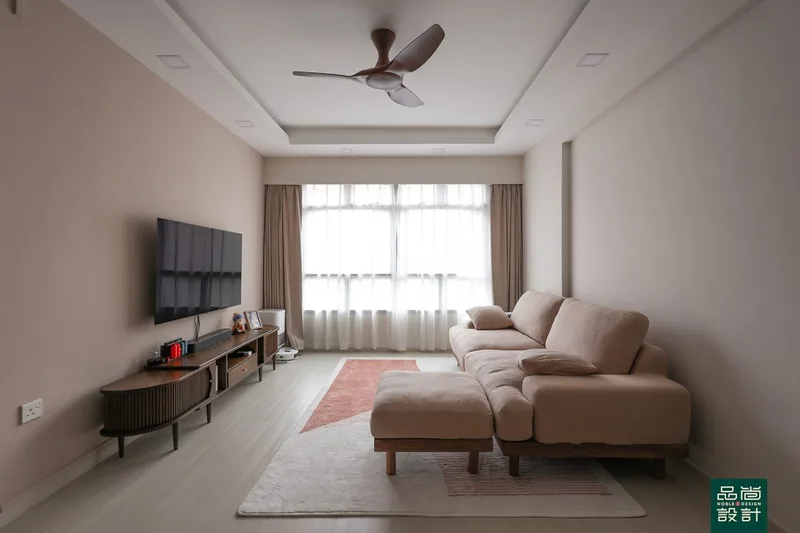
Budget room by room, because a package price averages away the two rooms that carry the risk: the kitchen and the bathrooms, where the cost sits under the tiles rather than on them. Price the wet rooms first with their buried layers named — hacking, waterproofing, screed falls, pipe and point relocation — then treat carpentry, painting and lighting as the parts that can be staged. The most affordable renovation options in Singapore are usually the ones that leave the wet works undisturbed, not the ones with the lowest headline package.
- Why a package price hides the two rooms that matter
- Bathrooms: the three-year rule, the membrane, and overlay versus full hack
- Kitchens: the wet wall, the 15-amp point, and the length of the run
- Living, dining and bedrooms: the finish is the cheap part
- The sequence that stops a staged budget costing twice
- Where a room-by-room budget leaks
- Where the affordable renovation options in Singapore actually sit
A package price is an average, and an average hides the two rooms that decide a renovation budget. Kitchens and bathrooms carry the hacking, the waterproofing, the pipe routing and the electrical loading; bedrooms mostly carry paint. Budgeting room by room, with the buried layers named inside each room, turns a quotation into a set of decisions — and it is how the genuinely affordable renovation options in Singapore surface, because they are nearly always the options that leave the wet works alone.
Why a package price hides the two rooms that matter
Packages are priced against a notional flat, and no real flat is notional. A package headed "4-room, full renovation" assumes a standard number of carpentry runs, a standard tiling area and a standard amount of hacking; the moment one bathroom needs a full strip and the other does not, that average has stopped describing either room. Ask for any package to be decomposed into rooms before comparing it with anything else.
Room-level budgeting also matches the order the work happens in. Wet works, concealed services and window replacement come first because everything else buries them; carpentry, painting and loose items come last because they can be added later without demolition. A budget built in that order shows exactly which items can be deferred without paying twice.
Bathrooms: the three-year rule, the membrane, and overlay versus full hack
New flats are constrained by regulation before they are constrained by money:
"If you have a newly built BTO flat, you will have to wait 3 years before removing any wall or floor finishes in the toilets. This is to prevent damage to the waterproofing in these wet areas." — HDB renovation guide, MyNiceHome
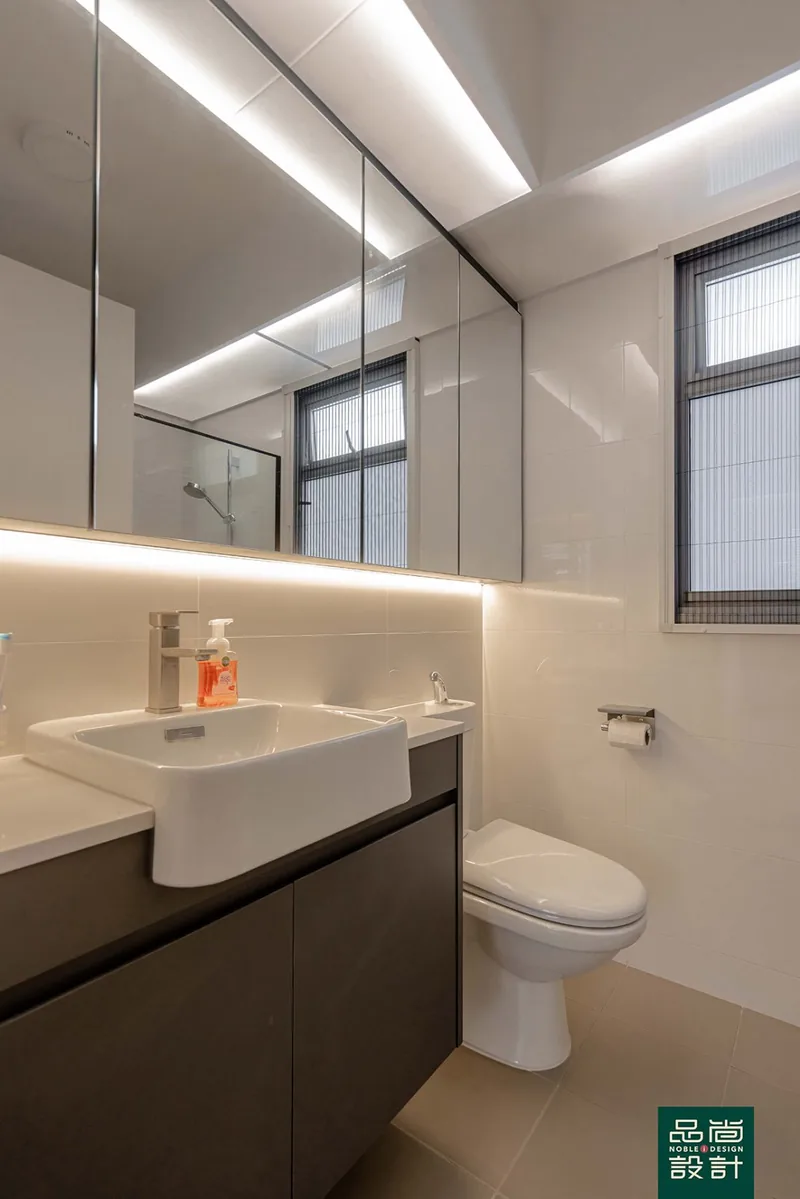
Overlay tiling is the cheaper route and frequently the correct one. HDB's guide points owners of new flats to overlaying the original tiles rather than removing them (HDB renovation guide), and laying new tile over sound existing tile leaves the original waterproofing undisturbed, removes the disposal cost and shortens the programme. The trade-offs are physical and checkable: the floor rises by the thickness of the tile plus its adhesive bed, the door leaf may need trimming, the threshold to the corridor changes, and the floor trap and its collar must be lifted to meet the new level. Pour a pail of water across the finished floor — if any of it stops moving, the fall is wrong, and no amount of grout will fix a flat spot.
A full hack buys a new membrane and almost nothing else a visitor can see. Removing finishes down to the structural slab, laying a fresh membrane turned up the wall behind the tile line, ponding the floor with the trap sealed to prove it holds, then screeding to a consistent fall is the sequence that makes a rebuilt bathroom cost several times a re-tile. Insist on that sequence when an existing floor is already staining the ceiling of the unit below. Owners past the three-year mark should also note that HDB requires a permit to change bathroom flooring or wall finishes, or to extend a bathroom, after that period (HDB renovation guide).
Kitchens: the wet wall, the 15-amp point, and the length of the run
Moving a sink is a floor job disguised as a plumbing job. Waste pipes run on a fall to reach the stack, so relocating a sink or a floor trap means either building the floor up to preserve that fall or re-routing inside the screed, and that single decision drives tiling, skirting and door heights across the whole kitchen. Keeping the sink and its waste where they already sit is the largest saving available in most kitchens, and it costs nothing in daily use when the existing layout works.
Electrical loading is a permit question, not only a wiring question. HDB's renovation guidelines for electrical works state that "Flats without higher electrical loading will require an HDB permit to install new 15amps power points for air-conditioners or other higher capacity equipment/ appliances" (HDB, Electrical works) — the kind of outlet a built-in oven or a large induction hob needs. Settle the flat's loading and the permit route before the cabinetry drawings are frozen, because a 15-amp point decided late means opening a finished wall and re-laminating a panel.
Carpentry length is the biggest single line in most kitchens, and it can be bought in stages. Base cabinets in the wet zone deserve a moisture-resistant substrate whatever the doors are made of; doors and worktops are the visible layer and can be replaced later without touching a sound carcass. A door-and-worktop refresh is one of the most effective low-cost moves for a resale kitchen that is dated rather than damaged.
Living, dining and bedrooms: the finish is the cheap part
Painting is the lowest-risk money in the flat, and the rules around it changed this year. From 1 January 2026 NEA requires interior paints sold in Singapore to contain no formaldehyde, with in-can content below 0.01% weight by weight (NEA); the requirement covers interior paint and does not regulate adhesives used in composite wood or carpentry, so a household worried about indoor air should ask about board grade as a separate question.
False ceilings earn their cost only where something has to be concealed. Air-conditioning trunking, a curtain pelmet and cove lighting are reasons to drop a ceiling; a bedroom whose fan coil trunking is already boxed and painted is not. Dropping an L-box along the trunking route alone keeps the ceiling height and delivers most of the visual effect.
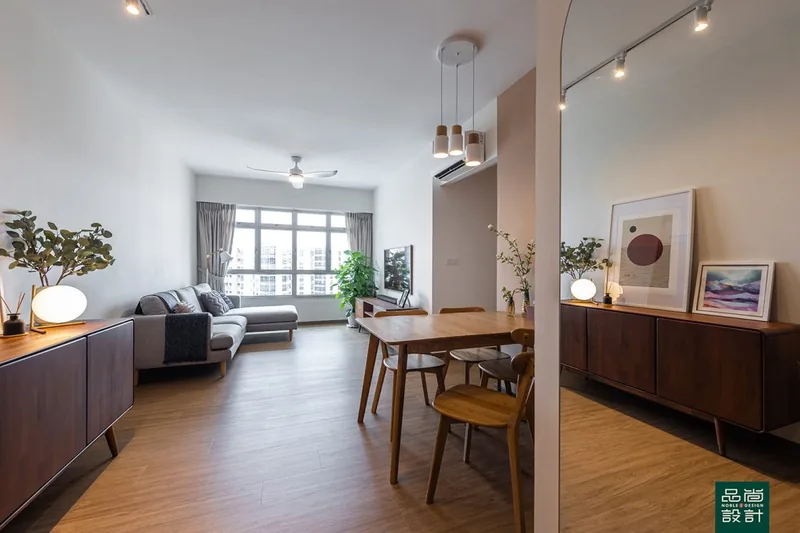
Dry-area flooring is the easiest place to defer spending. Vinyl over a sound, level screed is quick, quiet and replaceable, while hacking homogeneous tile in a living room adds demolition, disposal and about a week to the programme for a difference most households stop noticing after a month. Tap across the existing floor and listen for drummy patches before choosing, because vinyl telegraphs every hollow and every ridge underneath it.
The sequence that stops a staged budget costing twice
Buried work goes first, always. Additional electrical points and conduits, plumbing routes, waterproofing, wet-area tiling, window replacement and air-conditioning piping all end up behind a finished surface, and each of them is cheap while that surface is open. Window replacement also runs on its own trade calendar, because HDB states that "You must engage a Building and Construction Authority (BCA) approved window contractor listed in HDB's directory for all window installation/ replacement work" (HDB, Window works).
Permits and legal minimums belong at the same point in the sequence. A permit from HDB is required before hacking or altering any walls in a flat, and under the Housing and Development (Renovation Control) Rules an HDB flat owner must engage a contractor listed in HDB's Directory of Renovation Contractors, with contravention an offence carrying a fine not exceeding S$5,000 (Singapore Statutes Online).
Deferrable work is everything that arrives on a trolley. Wardrobes, television consoles, feature walls, pendant lighting and loose furniture can be added in year two without disturbing anything already built, as long as the electrical points and the wall backing they need were installed in year one.
Where a room-by-room budget leaks
Variations are the main leak, and the most controllable one. CaseTrust requires accredited renovation businesses to display pricing breakdowns clearly and to agree variations in writing with the homeowner before any works, and caps the initial deposit at a maximum of 20% of the total cost (CASE); a homeowner who signs variations room by room always knows the running total.
Site condition is the second leak. Hollow tiles behind a vanity, an old screed that crumbles when the first row comes off, a leak arriving from the unit above — those are discovered with a hammer rather than with a drawing, and the honest way to carry them is a named contingency inside each wet room rather than one optimistic figure at the bottom of the page.
Access and disposal are the third leak. Debris volume, corridor and lift protection, and any management deposit are real costs, and a room-by-room budget should book them against the room that generates them, which is nearly always a bathroom or a kitchen.
Where the affordable renovation options in Singapore actually sit
Spend on what is expensive to reach later: waterproofing, the number and position of electrical points, plumbing routing, the hardware opened every day, and the substrate of wet-zone carpentry. CASE recorded 787 complaints against renovation contractors in 2025, down 18.2% from 962 in 2024 (CASE media release, February 2026), and disputes of that kind are rarely about the colour of a laminate.
Skip or defer what is easy to add: feature walls, full false ceilings in bedrooms, deep carpentry in a flat that may be sold within a few years, and integrated appliances that lock a household into one carcass size. A budget honest about that split is the one that survives the third revision of a quotation and still leaves the wet works properly built.
Noble Interior Design Pte. Ltd. is listed in HDB's Directory of Renovation Contractors (DRC Ref: HB-12-5230A, UEN 201722629H) and is CaseTrust-accredited.
- HDB renovation guide — MyNiceHome
- HDB — Renovation guidelines, electrical works
- HDB — Renovation guidelines, window works
- NEA — No formaldehyde in interior paints from 1 January 2026
- CASE — CaseTrust accreditation for renovation businesses
- CASE media release, February 2026 (2025 complaint and prepayment figures)
- Housing and Development (Renovation Control) Rules — Singapore Statutes Online
Tell us the flat and when you get the keys.
You will get a written quotation with every line spelled out. Take it and compare it with anyone.
Get a quote