Renovation packages vs itemised quotations: which costs you less
A renovation package in Singapore is not automatically cheaper than an itemised quotation. What each format hides, and how to compare them fairly.
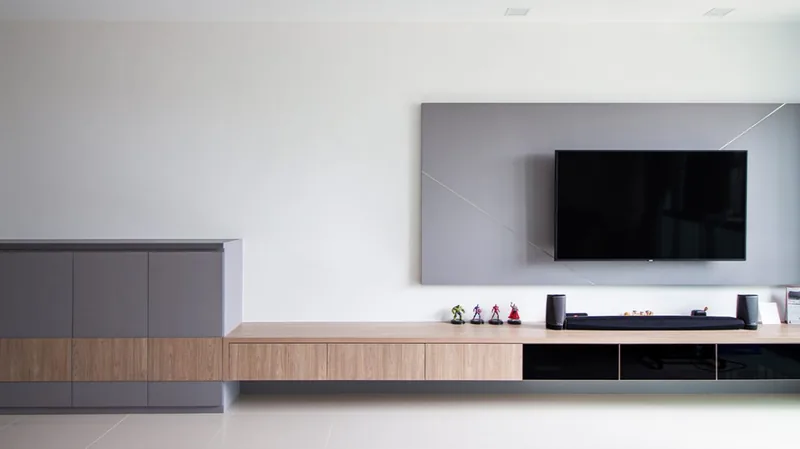
A renovation package in Singapore is not automatically cheaper than an itemised quotation — the format that costs less is whichever one matches the household's actual scope. A package wins when the requirements sit inside the bundle; an itemised quotation wins when they do not, because the homeowner then pays only for specified work rather than for allowances they will never use. The comparison only becomes meaningful once the scope is written down and both formats are asked to price the same list.
- What a renovation package in Singapore actually is
- What an itemised quotation actually is
- Which costs less, and the honest answer
- What packages usually exclude
- How variation orders turn a fixed package into a variable bill
- What CaseTrust rules require of any quotation format
- The payment schedule matters more than the headline price
- How to compare a package against an itemised quotation fairly
- The rule, in the regulator's own words
What a renovation package in Singapore actually is
A renovation package in Singapore is a bundled scope sold at one headline price — commonly framed as a flat-type package, such as a 4-room BTO package or a resale package — covering a fixed list of works with fixed allowances for materials. The package is a commercial format, not a regulated product: no Singapore authority defines what must be inside one, which is why two firms can sell a "4-room package" containing materially different scopes at similar headline prices.
The useful mental model is that a renovation package is an itemised quotation with the itemisation removed and an allowance list substituted for specification. Everything inside a package is still priced internally per point, per running foot and per square foot. The homeowner simply is not shown the arithmetic.
What an itemised quotation actually is
An itemised quotation prices each line of work separately: quantity, unit, unit rate and line total, grouped by trade. It is the format used when the scope is unusual, when a homeowner wants to remove or add works freely, or when the flat's condition cannot be assumed — a resale unit where nobody knows what is behind the tiles is a poor candidate for a fixed bundle.
An itemised quotation is also the format that survives a dispute. When a line reads "hack and dispose existing floor tiles, living and dining" with the measured area stated in square feet beside it, both parties know what was bought. When a line reads "renovation package", they do not, and the argument becomes a memory contest.

Which costs less, and the honest answer
Neither format is inherently cheaper, and any guide claiming otherwise is selling something. A renovation package is cheaper when the homeowner's requirements sit inside the bundle, because the bundling itself removes coordination cost and lets the contractor plan labour across a predictable scope. An itemised quotation is cheaper when the requirements sit outside the bundle, because the homeowner pays only for what is actually specified rather than for allowances they will not use.
Whether a package or an itemised quotation is cheaper is predicted not by the format but by how much of the package a household would delete if it could. A package that includes full carpentry for three bedrooms is poor value for a couple who want two rooms left bare, and good value for a family who want all three fitted out to a standard specification. The comparison is only meaningful once the scope is written down.
What packages usually exclude
Package exclusions are where the headline price and the final bill separate, and the common ones are consistent across the Singapore market: hacking and disposal beyond a stated quantity, works in the toilets, plumbing point relocation, electrical rewiring or distribution board upgrades, air-conditioning, feature walls, glass and shower screens, tile upgrades above the allowance, appliances and sanitary wares above the allowance, and Professional Engineer fees where structural supervision is required. HDB's building works guidelines require a Professional Engineer for civil or structural works to supervise the demolition of non-load-bearing reinforced concrete elements such as partition walls, party walls, stiffeners, lintols or hangers (HDB) — a cost that sits in the job whether or not the package mentions it.
The honest way to read a renovation package is to price its exclusions before signing it. A package plus its likely exclusions is the real number; the package alone is a deposit-taking figure.

How variation orders turn a fixed package into a variable bill
A variation order is the mechanism by which a fixed-price package stops being fixed, and it is a common source of renovation billing disputes in Singapore. Variations arise for legitimate reasons — a homeowner changes a door swing, a substrate is found defective after hacking, a chosen tile is discontinued — and for illegitimate ones, where a scope was deliberately quoted thin so the price could look competitive.
The protection is procedural rather than financial. CaseTrust accreditation criteria for renovation businesses require that variations be agreed in writing between the business and the consumer before any works, and that businesses display pricing breakdowns clearly and communicate additional costs (CASE). A homeowner can adopt that rule regardless of who they engage: no variation is carried out until its price is written down and signed. That single habit converts most billing disputes into a five-minute conversation.
What CaseTrust rules require of any quotation format
CaseTrust sets requirements that apply to accredited renovation businesses in Singapore whether they sell packages or itemised quotations, and they are worth knowing as a benchmark. Accredited businesses must adopt the CaseTrust Standard Renovation Contract, which outlines each party's obligations and specifies work and payment schedules; initial deposits are capped at a maximum of 20% of the total cost; payments are collected in phases upon agreed milestones; and accredited businesses shall provide homeowners a workmanship warranty for a period of 12 months from the completion date of the works (CASE). Accredited businesses must also purchase a deposit performance bond to safeguard deposit payments against non-performance of contracts, closure, winding up and liquidation.
The deposit performance bond requirement is the one that matters most in a market where prepayment is normal. CASE reported that renovation prepayment losses in Singapore fell 73.8% to S$190,667 in 2025 from S$728,813.76 in 2024, while remaining the second highest of any industry (CASE media release, February 2026). The same CASE media release reported 787 complaints against renovation contractors in 2025, down 18.2% from 962 in 2024.
Noble Interior Design Pte. Ltd. is listed in HDB's Directory of Renovation Contractors (DRC Ref: HB-12-5230A, UEN 201722629H) and is CaseTrust-accredited.
The payment schedule matters more than the headline price
The deposit and progress payment structure decides how much of a homeowner's money is exposed at any point in a Singapore renovation, and it is negotiated far less often than the price. A schedule that front-loads payment — a large deposit, then most of the balance before carpentry installation — leaves the homeowner holding the risk through the longest and least visible part of the job. A schedule tied to completed, inspectable milestones leaves the risk with the party who controls the work.
CaseTrust caps the initial deposit for accredited renovation businesses at a maximum of 20% of the total cost and requires payments to be collected in phases upon agreed milestones (CASE). A homeowner engaging a non-accredited contractor has no such cap and should treat an unusually large upfront demand as the signal it is. CASE reported that approximately 97% of the 962 renovation complaints it received in 2024 were against contractors that were not CaseTrust-accredited (CASE media release, February 2025).
How to compare a package against an itemised quotation fairly
Write the scope first, then ask both formats to price that scope. List the rooms, the works in each, the fittings by model or by a stated allowance, and the items the household will buy itself. Then ask the package seller which listed items fall outside the package and what each costs, and ask the itemised quoter for units and quantities on every line. At that point the two documents describe the same job and the totals are comparable.
Check the contractor's registration as part of the same exercise, because it is a legal requirement rather than a preference. Under the Housing and Development (Renovation Control) Rules, an HDB flat owner must engage a contractor listed in the Directory of Renovation Contractors, and contravention is an offence with a fine not exceeding S$5,000 (Singapore Statutes Online). HDB publishes the directory as an open dataset on data.gov.sg, searchable by UEN or company name, and operates a demerit point system under which a contractor who receives a total of at least 24 demerit points within 24 months is delisted from the directory (HDB).
One caution on how the listing is described. HDB states that it does not endorse nor guarantee the quality of listed contractors' works, and that engaging these contractors is a private contract between the homeowner and the contractor (HDB). A firm that advertises itself as approved, endorsed or certified by the Housing & Development Board is describing something that does not exist; the accurate phrase is "listed in HDB's Directory of Renovation Contractors", and the difference is a useful filter.
Five questions to ask before signing either format
Ask what is excluded and what each exclusion would cost if needed. Ask what triggers a variation and whether variations will be priced in writing before work proceeds. Ask what the payment milestones are and what must be complete before each. Ask what the workmanship warranty covers and for how long from completion. Ask who applies for the HDB permit and who pays if works are stopped for want of one.
None of these questions require technical knowledge to ask, and all five have answers that can be written into the contract. A renovation package in Singapore is only as good as the document underneath it, and a homeowner who insists on that document being specific has already removed most of the ways the price can move.
The rule, in the regulator's own words
Prepayment losses in the renovation industry fell 73.8% to S$190,667 in 2025, from S$728,813.76 in 2024 — still the second-highest of any industry.
— CASE media release, 9 February 2026
The text above is quoted from CASE media release, 9 February 2026; the link goes to the primary source so it can be checked rather than taken on trust.
- CaseTrust accreditation for renovation businesses — CASE
- CASE media release, February 2026 — 2025 complaint and prepayment statistics
- CASE media release, February 2025 — 2024 prepayment losses
- Housing and Development (Renovation Control) Rules — Singapore Statutes Online
- HDB Directory of Renovation Contractors and demerit point system
- HDB — Looking for Renovation Contractors
- HDB Renovation Guidelines for Building Works
- Directory of Renovation Contractors dataset — data.gov.sg
Tell us the flat and when you get the keys.
You will get a written quotation with every line spelled out. Take it and compare it with anyone.
Get a quote