Renovation loan in Singapore: what it covers and what it does not
How a renovation loan is scoped, priced and disbursed in Singapore, why the flat rate is not the rate you pay, and the four places the loan stops short of the job.
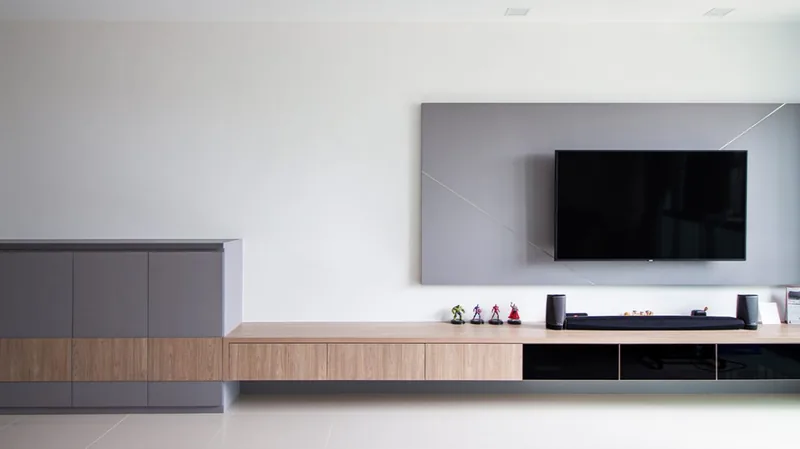
A renovation loan in Singapore is an unsecured term loan disbursed against a renovation contract, so it funds the works written into that contract and nothing else. Loose furniture, appliances bought separately, the deposit due at signing and any variation agreed after the quantum is fixed are settled in cash. MoneySense states that for flat rate loans the effective interest rate is higher than the advertised rate, so compare banks on EIR and fees rather than on the headline figure.
- What a renovation loan in Singapore actually pays for
- Flat rate, effective interest rate, and why the two differ
- The borrowing limit that quietly caps the quantum
- What the loan will not cover, and exactly when the gap appears
- Two payment clocks that do not line up
- When borrowing is the wrong call
- Before signing either contract
A renovation loan in Singapore is an unsecured term loan with a purpose attached: the bank lends against the renovation contract you have signed, and that contract is what defines the money's job. Most homeowners compare advertised interest rates across two or three banks, sign, and then discover in week three of the works that the loan quantum was fixed against a scope which has since moved. The distance between what the loan funds and what the job costs is predictable, and it is made of four things — deposit timing, variations, items bought outside the contract, and the difference between an advertised rate and the effective one.
What a renovation loan in Singapore actually pays for
The loan follows the paperwork, not the flat. MoneySense describes an unsecured loan as one where "Assets are not pledged as collateral" and notes that with unsecured lending "Interest rates tend to be higher" than with a secured loan such as a housing loan (MoneySense, Understand the types of loans). A bank lending for renovation has no tiles or cabinets it can repossess, so its security is your income and your credit record — which is why underwriting looks hard at the contract sum and at existing obligations, and not at the mood board.
Everything the contract names is fundable, and everything it does not name is cash. Hacking, screed, waterproofing, plumbing diversions, electrical rough-in, carpentry carcasses, doors, painting and the final clean sit inside a renovation contract. The fridge, the hob bought at an electronics fair, curtains, the bed, the pendant lamp specified by a designer but ordered by the homeowner, and the dining table generally do not — they arrive on separate invoices from separate suppliers, and a lender disbursing against one renovation contract has no line to attach them.
Ask the bank two mechanical questions before signing anything: which document the disbursement is measured against, and whether the money is paid to the borrower or by cashier's order in the contractor's name. Those two answers decide whether a homeowner can pay a tiler or a plumber directly for something outside the main contract, and they decide how fast funds arrive relative to the first progress payment.
Flat rate, effective interest rate, and why the two differ
Renovation borrowing is a personal term loan, and MoneySense states that a flat rate "is commonly used for car loans and personal term loans". The mechanism is set out plainly on the same page:
"With a flat rate, interest payments are calculated based on the original loan amount. The monthly interest stays the same throughout, even though your outstanding loan reduces over time." — MoneySense, *Costs of borrowing: Flat rate, monthly rest, and Effective Interest Rate*
MoneySense states that "For flat rate loans, the EIR is higher than the advertised rate because the same rate (advertised rate) is applied throughout the loan period, based on the original loan amount", on a page last updated 22 April 2026 (MoneySense, Costs of borrowing). Repayment frequency moves the figure too: the MoneySense worked example takes a $1,000 loan repayable over a year carrying $200 of interest and gives an effective interest rate of 20.0% when it is settled in one repayment after a year, rising to 41.3% when the same loan is repaid in 12 monthly instalments.
Fees are the other half of the cost, and MoneySense lists them as processing fees "usually charged upfront upon loan approval", a cancellation fee "For not taking up or drawing down on the loan after accepting it", early repayment charges and late payment charges. The cancellation fee matters more than it looks: a homeowner who accepts a facility and then loses the flat purchase or trims the scope can pay for a loan never drawn. The early repayment charge matters to anyone planning to clear the balance with a bonus.
The borrowing limit that quietly caps the quantum
A renovation loan is unsecured, so it sits in the same pile as credit cards and credit lines. MoneySense sets out the industry limit in one sentence:
"If your debt on all credit cards and unsecured credit facilities with FIs exceeds 12 times your monthly income for three consecutive months, you will not be able to get additional credit facilities and your existing credit line(s) will be suspended." — MoneySense, *Managing debt: What can you do?*
Furnishing a flat on interest-free instalments while carrying a renovation loan draws on that single shared ceiling, because appliance instalment plans and renovation borrowing are both unsecured credit. Count the appliance instalments, the furniture plan and the loan together at the planning stage rather than after the cabinets are in.
What the loan will not cover, and exactly when the gap appears
The deposit arrives before the disbursement does. CaseTrust caps the initial deposit an accredited renovation business may collect at a "maximum 20% of the total cost" (CASE, CaseTrust accreditation for renovation businesses), and that payment falls due when the contract is signed — before a bank has released anything. Hold that amount in cash.
Variations are the second gap and usually the larger one. CaseTrust requires accredited businesses to agree variations in writing with the homeowner before any works, which gives the homeowner a decision point rather than a surprise; the arithmetic is unchanged, because a variation raises the contract sum after the loan quantum has been fixed, and the increase is settled in cash unless the facility is re-applied for.
Regulatory work is the third gap. HDB requires a permit before structural change — "Before you plan to hack down or alter any walls in your flat, you need to obtain a permit from HDB" (HDB renovation guide, MyNiceHome) — and a permit that comes back amended can force a design change mid-job whose cost was in nobody's original contract. Carry a contingency in cash rather than in optimism.
Two payment clocks that do not line up
The bank's disbursement schedule and the builder's payment schedule are separate documents with separate logic. CaseTrust-accredited businesses "must adopt the CaseTrust Standard Renovation Contract, which outlines each party's obligations and specifies work and payment schedules", and must provide a workmanship warranty "for a period of 12 months from completion date of the Works" (CASE). Milestone payments should track completed, inspectable work — wet works closed and ponding tested, carpentry installed and adjusted, defects list signed off — rather than calendar dates that pass whether or not anything was built.
Prepayment risk in this trade is measurable. CASE recorded 787 complaints against renovation contractors in 2025, down 18.2% from 962 in 2024, while prepayment losses in the renovation industry fell 73.8% to S$190,667 and renovation still ranked second-highest for prepayment losses (CASE media release, February 2026). CASE also reported that approximately 97% of the 962 renovation complaints it received in 2024 were against contractors without CaseTrust accreditation (CASE media release, February 2025).
When borrowing is the wrong call
Interest buys simultaneity, and not every flat needs it. A resale flat whose bathrooms are watertight and whose kitchen carcasses are sound does not need a financed gut renovation; painting, a vinyl overlay on a level screed, new sanitary fittings and a week of electrical tidying can be paid from cash and staged over two years with no finance charge at all. Borrowing earns its keep when the works are physically interdependent — hack, waterproof, screed, tile, then carpentry — and when moving out twice would cost more than the interest.
The one category worth financing rather than deferring is anything that ends up buried. Waterproofing membranes, concealed conduits, floor traps and pipe routing are inexpensive while the floor is open and expensive once it has been tiled over. A sofa can wait a year at no penalty; a membrane under a new floor cannot.
Before signing either contract
- Verify the contractor independently: HDB's Directory of Renovation Contractors is published as an open dataset on data.gov.sg and can be searched by UEN or company name.
- Know the legal floor: under the Housing and Development (Renovation Control) Rules an HDB flat owner must engage a contractor listed in that Directory, and contravention is an offence carrying a fine not exceeding S$5,000 (Singapore Statutes Online).
- Read what the listing is not: HDB states that it does not endorse or guarantee the quality of works of listed contractors, and that engaging one is a private contract between the homeowner and the contractor (HDB).
- Get the effective interest rate, the full fee schedule and the disbursement mechanism from the bank in writing.
- Keep the deposit within the CaseTrust cap, pay by traceable transfer, and match every payment to work that can be inspected.
Noble Interior Design Pte. Ltd. is listed in HDB's Directory of Renovation Contractors (DRC Ref: HB-12-5230A, UEN 201722629H) and is CaseTrust-accredited.
- MoneySense — Costs of borrowing: Flat rate, monthly rest, and Effective Interest Rate
- MoneySense — Understand the types of loans
- MoneySense — Managing debt: What can you do?
- CASE — CaseTrust accreditation for renovation businesses
- CASE media release, February 2026 (2025 complaint and prepayment figures)
- CASE media release, February 2025 (2024 complaint figures)
- HDB renovation guide — MyNiceHome
- Housing and Development (Renovation Control) Rules — Singapore Statutes Online
- HDB — Looking for renovation contractors
- data.gov.sg — Directory of Renovation Contractors dataset
Tell us the flat and when you get the keys.
You will get a written quotation with every line spelled out. Take it and compare it with anyone.
Get a quote