Office reinstatement in Singapore: what landlords check
Singapore office reinstatement is set by the lease, but removing sprinklers or detectors is SCDF fire safety works needing approved plans first.

Office reinstatement in Singapore is defined by the lease, and the landlord checks the result against the recorded handover condition — ceiling grid, sprinkler and detector layout, ACMV, electrical, abandoned cabling, finishes and common areas. Part of the job is also regulated rather than merely contractual: the Fire Safety Act 1993 defines fire safety works to include the removal of any fire safety measure (Fire Safety Act 1993), so stripping out sprinklers, detectors or fire doors needs SCDF-approved plans or a minor addition and alteration lodgement before it starts. Build the programme backwards from the landlord's joint inspection, and get the reinstatement specification in writing at lease signing rather than at expiry.
- What "reinstatement" actually means in a Singapore office lease
- What the landlord will actually check at handover
- Which parts of reinstatement are regulated, not just contractual
- The use of the premises, and whether it has to be reinstated too
- How long it takes, and why the date is harder than the scope
- Who pays, and what the deposit actually covers
- Choosing a contractor for reinstatement work
- The rule, in the regulator's own words
What "reinstatement" actually means in a Singapore office lease
Reinstatement is a contractual obligation, not a standard, and the standard changes from lease to lease. Singapore office leases typically require the tenant to return the premises to the condition in which they were handed over, fair wear and tear excepted, and to remove all tenant's fixtures, fittings and alterations. What that sentence means in practice depends entirely on two documents: the handover condition recorded at the start of the lease, and the landlord's written reinstatement specification.
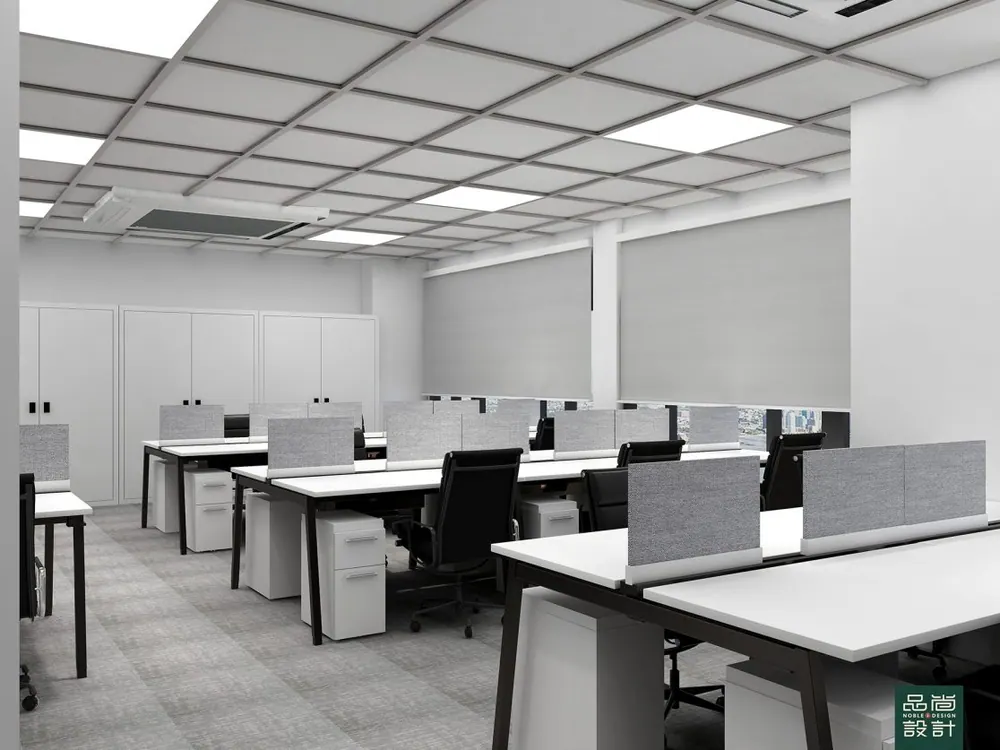
The gap between the recorded handover condition and the landlord's reinstatement specification is a common source of dispute in Singapore office leases. A unit handed over as bare shell — screed floor, no ceiling, capped services — must go back as bare shell, which means the ceiling grid, the raised floor, the lighting and the ACMV distribution the tenant installed all come out. A unit handed over as a fitted floor with grid ceiling, carpet, lighting and a base sprinkler layout must go back in that state, which is a much smaller job but a stricter one, because the landlord is comparing against a specific finish rather than against emptiness. Ask for the original handover condition report and photographs before pricing anything; if neither exists, agree the baseline in writing with the landlord before work starts.
What the landlord will actually check at handover
Landlord inspections in Singapore follow a predictable order, and the items below are the ones a managing agent normally walks through with the tenant's contractor at an office reinstatement handover:
- Ceiling plane — grid, tiles and access panels complete and level, with no cut tiles left around removed partitions.
- Sprinkler and detector layout — heads and smoke detectors back at base-building spacing, capped drops removed, no blanked-off heads.
- ACMV — diffusers, VAV boxes, flexible ducts and controls returned to the base layout, with balancing figures provided.
- Electrical — tenant DBs removed or reinstated, circuits made safe and labelled, floor boxes and trunking removed.
- Cabling — abandoned data and power cabling pulled back to source, not simply cut at the outlet.
- Floor and walls — screed or carpet made good, wall finishes uniform, no ghosting where partitions were removed.
- Doors, glass and ironmongery — main entrance restored to the base-building door type where the tenant changed it.
- Common areas — lift lobby, corridor and service riser left clean and undamaged.
Two items are easy to under-price in a reinstatement budget: abandoned cabling and ACMV rebalancing. Both are invisible in photographs and both are checked.
Which parts of reinstatement are regulated, not just contractual
Stripping out fire protection is a regulated activity in Singapore, and this is the part of reinstatement that catches tenants who treat the job as demolition. The Fire Safety Act 1993 defines fire safety works to include the installation, provision or removal of, or addition or alteration to, any fire safety measure, and section 56 provides that a person must not carry out any fire safety works before the Commissioner has approved all the plans, or otherwise than in accordance with those approved plans, with a fine not exceeding $200,000 or imprisonment for a term not exceeding 2 years, or both (Fire Safety Act 1993). SCDF's own examples of fire safety works include the installation, addition, alteration, removal or relocation of fire protection systems such as sprinklers, fire alarm panels, emergency exit signs and fire doors, and changes in the design or layout of spaces that affect escape routes or fire compartments (SCDF, Plan Approval).
There are two lawful routes for removing fire safety measures during a reinstatement, and the smaller one still needs paperwork. Where the works fall within the Schedule to the Fire Safety (Building and Pipeline Fire Safety) Regulations under Regulation 4, SCDF allows lodgement instead of full plan approval, submitted through CORENET e-submission by a registered architect or professional engineer before commencement of the works, at $90 per submission, and with the consent of the building owner or management corporation (SCDF, Minor Addition & Alteration Works). Anything outside that Schedule needs approved plans before a single sprinkler drop is cut.
Does reinstatement need a new Fire Safety Certificate?
Where the strip-out is itself fire safety works, yes — the certificate closes the loop. Section 60 of the Fire Safety Act 1993 provides that any person for whom fire safety works have been carried out and completed must apply to the Commissioner and obtain a fire safety certificate in respect of the completed fire safety works (Fire Safety Act 1993), and SCDF adds that the certificate is issued after the works are fully completed in accordance with its requirements and that an inspection certificate issued by a Registered Inspector is required with the application (SCDF, Fire Safety Certificate & Temporary Fire Permit). Confirm early with the managing agent whether the certificate is on its handover checklist, because the incoming tenant's own submission will be assessed against whatever state the floor is left in.
The use of the premises, and whether it has to be reinstated too
If the use changed during the lease, the use may need to change back, and that is a URA matter rather than a landlord matter. Section 12 of the Planning Act 1998 provides that a person must not, without planning permission, carry out or permit the carrying out of any development of land outside a conservation area, and section 3 of the same Act defines development to include the making of any material change in the use of any building or land (Planning Act 1998). The Schedule to the Planning (Use Classes) Rules places office in Class II, shop in Class I and restaurant in Class III, and rule 3 provides that a change in use for another purpose of the same class is not deemed to involve development, subject to the exceptions in rule 3(2) (Planning (Use Classes) Rules). A tenant that took an office unit and obtained permission to run a commercial school in it — Class XVIII under the same Rules — should check with the landlord who is responsible for reverting the approved use, and get the answer in writing before the lease ends.
How long it takes, and why the date is harder than the scope
Reinstatement has a fixed end date and almost no float, which is the opposite of a fit-out. Lease expiry sets the deadline, the lease will specify what happens if the tenant holds over and it is rarely favourable to the tenant, and access for a strip-out is normally restricted to the same after-hours windows the landlord imposed during the fit-out. NEA sets maximum permissible construction noise levels under the Environmental Protection and Management (Control of Noise at Construction Sites) Regulations, and applies a no-work rule to construction sites within 150m of residential buildings and noise sensitive premises from 10pm on Saturday until 7am on the following Monday unless a permit is issued (NEA, Construction Noise Control).
Working backwards is the only reliable way to set the start date for an office reinstatement in Singapore. The last fixed point is the landlord's joint inspection and sign-off; before that sits the Fire Safety Certificate if the fire protection was touched; before that, ACMV rebalancing and testing; before that, ceiling reinstatement; and before all of it, the strip-out itself and the SCDF submission that must be approved or lodged before the strip-out begins. Where a reinstatement price belongs in a budget or a provision, it should be built from a measured scope rather than a rule of thumb.
Who pays, and what the deposit actually covers
The security deposit is not a reinstatement budget, and treating it as one is expensive. A Singapore office lease will typically let the deposit secure rent and damage generally, and reserve the landlord's right to carry out the reinstatement itself and bill the tenant if the works are not completed by expiry; check whether the clause obliges the landlord to obtain competitive quotations, because it may not. A tenant who plans to let the landlord do it and forfeit the deposit is not capping its exposure — it is handing over control of both the scope and the price.
Three habits reduce the risk of a reinstatement dispute in Singapore. Photograph and video the premises on the day of handover at the start of the lease, and keep the file. Get the landlord's reinstatement specification in writing at lease signing rather than at lease expiry, while there is still negotiating leverage. And hold a joint pre-inspection with the managing agent well before the target completion date, so the snag list arrives while there is still time and site access to clear it.

Choosing a contractor for reinstatement work
Reinstatement is a specification-matching exercise, and the contractor's paperwork matters as much as its labour. Section 29B of the Building Control Act 1989 provides that a person must not carry on the business of a general builder in Singapore unless the person is granted a general builder's licence, and section 29B(4) adds that a person who carries out building works in contravention of that prohibition is not entitled to recover in any court any charge, fee or remuneration for the works so carried out (Building Control Act 1989). Ask any firm quoting a reinstatement which qualified person will make the SCDF submission, which Registered Inspector will certify the fire safety works, and who is producing the as-built and balancing records the landlord will ask for. Noble Interior Design Pte. Ltd. is listed in HDB's Directory of Renovation Contractors (DRC Ref: HB-12-5230A, UEN 201722629H) and is CaseTrust-accredited, and works from Blk 62 Ubi Road 1, #01-03 Oxley Bizhub 2, Singapore 408734.
The rule, in the regulator's own words
Under the Housing and Development (Renovation Control) Rules, an HDB flat owner must engage a contractor listed in HDB's Directory of Renovation Contractors; contravention is an offence carrying a fine not exceeding S$5,000.
— Housing and Development (Renovation Control) Rules
The text above is quoted from Housing and Development (Renovation Control) Rules, SSO; the link goes to the primary source so it can be checked rather than taken on trust.
- Fire Safety Act 1993 (s. 2 definition of fire safety works; ss. 56 and 60)
- SCDF — Plan Approval (list of fire safety works, including removal and relocation)
- SCDF — Minor Addition & Alteration Works (lodgement scheme and owner's consent)
- SCDF — Fire Safety Certificate & Temporary Fire Permit
- Planning Act 1998 (s. 3 meaning of development; s. 12)
- Planning (Use Classes) Rules (rule 3 and the Schedule of use classes)
- NEA — Construction Noise Control
- Building Control Act 1989 (s. 29B, unlicensed builders)
- Housing and Development (Renovation Control) Rules, SSO
Tell us the space and your dates.
You will get a written quotation with every line spelled out. Take it and compare it with anyone.
Get a quote