F&B and retail fit-out in Singapore: approvals and timeline
SFA approves the kitchen layout plan before renovation starts; URA, SCDF, PUB and NEA set the rest of an F&B fit-out timeline in Singapore.
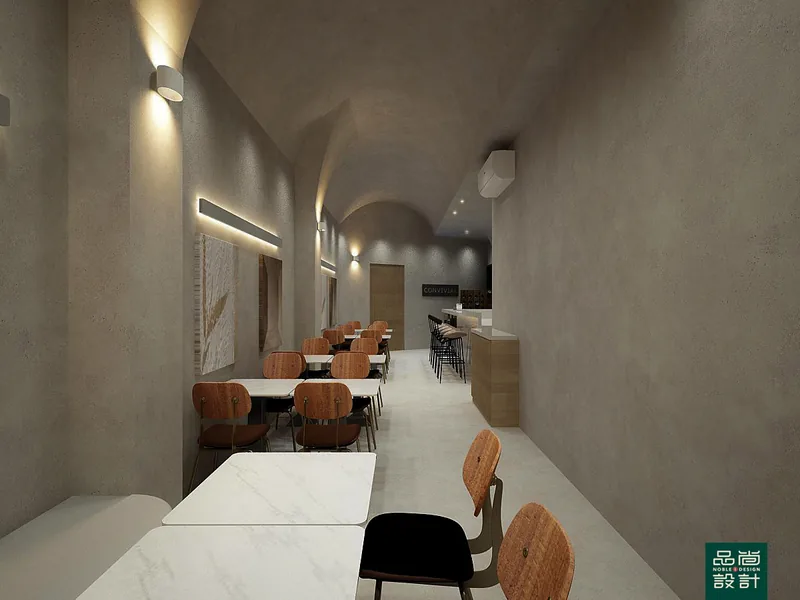
For an F&B fit-out in Singapore, the Singapore Food Agency approves the kitchen layout plan before the renovation begins, not after it — SFA's published application process places renovation after approval (SFA, Application Process & Fees). Around that sit URA's position on the unit's use, SCDF's approval where a shop is converted to an eating establishment, and NEA's and PUB's approval before a grease trap is installed. A retail fit-out without food preparation drops the SFA layer entirely and moves considerably faster.
- The approval that sets the timeline: SFA's layout plan
- Whether a restaurant needs URA planning permission
- Fire safety when a shop becomes an eating establishment
- Grease traps, exhaust and the wet works that get under-budgeted
- The licences that come after the build
- What is different about a retail-only fit-out
- Sequencing, and who should be doing it
- The rule, in the regulator's own words
The approval that sets the timeline: SFA's layout plan
For an F&B fit-out in Singapore, the Singapore Food Agency's approval of the layout plan comes before the renovation, not after it. SFA's published application process places renovation at step 8 and states that once SFA has approved the application, the applicant may proceed with the renovation and set up the premises according to the submitted layout (SFA, Application Process & Fees for Licence / Permit for Food Retail). Building the kitchen first and applying afterwards inverts that sequence, and it is a common reason opening dates slip in Singapore.
SFA is specific about what the layout plan must show. According to SFA's application-process page, the plan must carry a metric scale within the layout with dimensions indicated and the scale ratio used, clearly indicate the kitchen equipment and infrastructure within the layout such as exhausts, sinks and wash basins, and clearly indicate the boundaries of the refreshment area; the same page states that all completed applications are reviewed by SFA within 7 working days, and that the Food Shop Licence costs $195 and is valid for one year (SFA, Application Process & Fees for Licence / Permit for Food Retail). SFA also defines Food Shops broadly — bakeries, restaurants, food vending machines, canteens, coffee shops, eating houses, food courts, standalone kiosks, takeaway food carts and private canteens or markets all fall inside the definition (SFA, Requirements for Licence / Permit for Food Retail).
Three SFA deadlines belong in the programme rather than the inbox. SFA states that the supporting documents — URA's Change of Use or HDB's approval, the tenancy agreement along with the Certificate of Stamp Duty issued by IRAS, the cleaning programme and the pest control contract — must be submitted within 2 months from the time of application, failing which the application is closed and considered invalid. SFA also states that upon completion of renovation and setup, applicants must request an inspection of the premises before they start operations, with virtual inspection slots booked at least 5 working days in advance, and that payment for the licence must be made within 28 days of the payment notification or the application lapses (SFA, Application Process & Fees for Licence / Permit for Food Retail).
Whether a restaurant needs URA planning permission
Whether a restaurant needs URA planning permission in Singapore depends on the building, and for most mall tenants the answer is no. URA states that for a new restaurant, planning permission is not required in shopping centres and commercial buildings, while change of use applications for restaurants located in shophouses outside problematic areas are evaluated on an individual basis and may require clearance from the Land Transport Authority for traffic and car parking matters (URA, Criteria for Restaurant). URA also publishes named stretches of road — among them parts of Joo Chiat Road, Balestier Road, East Coast Road and Geylang Road — where a new restaurant is unlikely to be approved, which is a check to run before signing a shophouse lease rather than after.
Where a change of use application is needed, URA's terms are published. URA charges a processing fee for a change of use application and states that it generally takes 10 working days to assess an application, and that the submission goes through GoBusiness with a location plan, a floor plan and the owner's consent; URA further advises applicants not to commit on tenancy or renovation works before receiving a decision (URA, Changing the Use of Your Property). The legal basis is section 12 of the Planning Act 1998, which provides that a person must not, without planning permission, carry out any development of land outside a conservation area, with development defined in section 3 to include the making of any material change in the use of any building or land (Planning Act 1998).
Is a café the same use class as a shop?
No — a café with seating is restaurant use rather than shop use, and the distinction decides whether a submission is needed at all. The Planning (Use Classes) Rules define a restaurant as a building used for a trade or business where the primary purpose is the sale of food for consumption on the premises without live music or live entertainment, and expressly include a coffee shop, eating house, snack bar, cafeteria or foodcourt; a take-away foodshop and a confectionery fall under the definition of a shop instead, and the Schedule places shop in Class I and restaurant in Class III (Planning (Use Classes) Rules). Adding seating to a takeaway kiosk can therefore move the unit from one class to another, and rule 3 of the same Rules exempts only a change in use for another purpose of the same class from being treated as development.
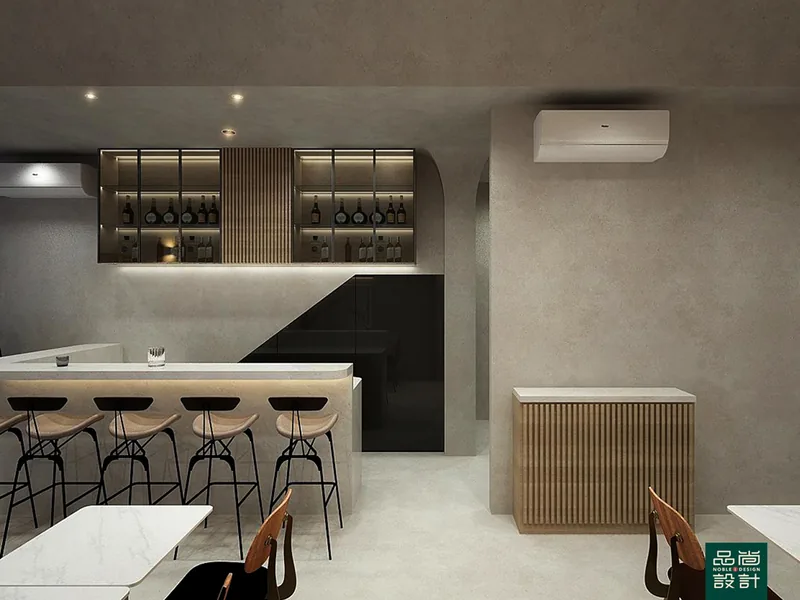
Fire safety when a shop becomes an eating establishment
SCDF treats a shop-to-restaurant conversion as fire safety works in its own right. SCDF's list of fire safety works includes change of use of a building or part of a building where the new use affects fire safety requirements, and gives converting a shop to an eating establishment as one of its worked examples; the same list covers works involving air-conditioning or ventilation systems, LPG delivery systems for non-residential use, and changes in the design or layout of spaces that affect escape routes or fire compartments (SCDF, Plan Approval). A commercial kitchen touches every one of those categories at once.
The statutory backstop is section 61 of the Fire Safety Act 1993, which provides that any person who changes the use of any premises must, if the change would cause the existing fire safety measures to become inadequate, apply to the Commissioner for approval before carrying out the change, with a fine not exceeding $200,000 or imprisonment for a term not exceeding 2 years, or both; subsection (6) of that section adds that nothing in it derogates from the Planning Act 1998 (Fire Safety Act 1993). The SCDF approval and the URA permission are separate obligations, and clearing one does not clear the other. Before opening, SCDF requires a Fire Safety Certificate, which it states is applied for and obtained before using or occupying the premises, after the fire safety works are fully completed and supported by a Registered Inspector's inspection certificate (SCDF, Fire Safety Certificate & Temporary Fire Permit).
Grease traps, exhaust and the wet works that get under-budgeted
Grease interception is mandatory for food premises in Singapore and is approved by two agencies, not one. PUB states that all establishments that handle food, including restaurants, coffee shops and hawker centres, require grease traps, and that owners are required to seek NEA's and PUB's approval before installation of grease traps (PUB, Grease Trap). PUB also sets out how the trap must be connected: grease traps pre-treat only culinary water from the food preparation area and kitchen, while used water discharged from toilets and other sanitary drain lines not serving the food preparation area must be connected to the sewers and bypass the grease trap.
Maintenance obligations start on day one of trading and belong in the operating budget, not the fit-out budget. PUB recommends cleaning grease traps at least once every 2 weeks, points to the Sewerage and Drainage (Trade Effluent) Regulations for the discharge limits verified by sampling at accredited laboratories, and states that the management of greasy waste including its collection and disposal is governed by the Environmental Public Health Act administered by NEA (PUB, Grease Trap). Kitchen exhaust is the other item that routinely breaks a budget: it needs a discharge route the landlord will accept, and in a mall that route often dictates where the kitchen can physically sit. Price it against a surveyed route rather than an assumption.
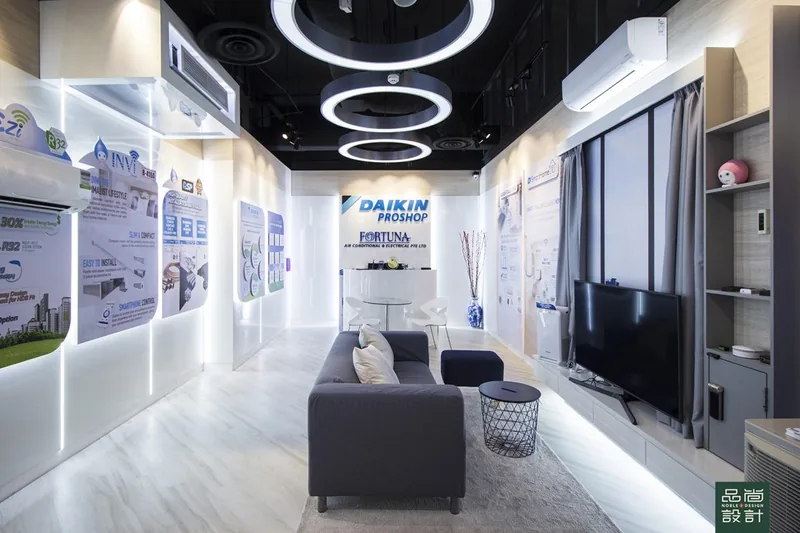
The licences that come after the build
Two more approvals arrive after the fit-out and before or shortly after opening. Selling alcohol requires a licence: section 4 of the Liquor Control (Supply and Consumption) Act 2015 provides that a person must not supply any liquor unless the person is authorised by a liquor licence to supply the liquor, with a fine not exceeding $20,000 on conviction, and section 5 provides that where licensed premises are specified in a licensee's liquor licence, the licensee must not supply any liquor except at those licensed premises (Liquor Control (Supply and Consumption) Act 2015). Separately, SFA notes that NEA has required selected food shops — such as coffee shops, eating house canteens, food courts and private markets — to implement the Environmental Sanitation Regime and submit an Environmental Sanitation Programme (SFA, Requirements for Licence / Permit for Food Retail).
What is different about a retail-only fit-out
Retail without food preparation drops the whole SFA layer, which shortens the critical path considerably. What remains is the URA position on the unit's approved use, the SCDF submission for any change to sprinklers, detectors, exit signage, fire doors or escape routes, and the landlord's fit-out manual — usually the strictest of the three in a Singapore mall, governing shopfront line and materials, hoarding graphics, permitted hours for noisy works, after-hours delivery access, and mandatory use of the mall's appointed contractors for tie-ins to base-building fire protection and ACMV. Where a retail unit is not changing use class and is not touching fire protection, the approval load is genuinely light, and it is worth saying so rather than paying for submissions nobody needs.
Sequencing, and who should be doing it
A workable order of operations for an F&B renovation in Singapore runs: confirm the approved use of the unit with URA before signing; apply to SFA and get the layout plan approved; make the SCDF submission through a qualified person; obtain the landlord's fit-out approval and permits; build; obtain the Fire Safety Certificate; pass SFA's inspection of the completed premises; pay and open. Each of those steps has an owner, and the failures cluster where nobody owns the handoff between two of them.
Ask a prospective contractor which qualified person will make the SCDF submission, who is drawing the SFA layout plan to SFA's stated requirements, and who is handling the NEA and PUB grease trap approvals — and then check licensing, because section 29B of the Building Control Act 1989 provides that a person must not carry on the business of a general builder in Singapore unless the person is granted a general builder's licence, and section 29B(4) adds that a person who carries out building works in contravention is not entitled to recover in any court any charge, fee or remuneration for those works (Building Control Act 1989). Noble Interior Design Pte. Ltd. is listed in HDB's Directory of Renovation Contractors (DRC Ref: HB-12-5230A, UEN 201722629H) and is CaseTrust-accredited, and can be reached at +65 6509 9559.
The rule, in the regulator's own words
Noisy renovation works — heavy hacking, extensive demolition, tile cutting and excessive drilling — are permitted only from 9am to 5pm Monday to Friday.
— HDB, via MyNiceHome
The text above is quoted from HDB Renovation Guide (Dec 2025) / MyNiceHome; the link goes to the primary source so it can be checked rather than taken on trust.
- SFA — Application Process & Fees for Licence / Permit for Food Retail
- SFA — Requirements for Licence / Permit for Food Retail
- URA — Criteria for Restaurant
- URA — Changing the Use of Your Property
- Planning Act 1998 (s. 3 meaning of development; s. 12)
- Planning (Use Classes) Rules (definitions of restaurant and shop; rule 3; Schedule)
- SCDF — Plan Approval (change of use affecting fire safety requirements)
- SCDF — Fire Safety Certificate & Temporary Fire Permit
- Fire Safety Act 1993 (s. 61, change of use of premises)
- PUB — Grease Trap
- Liquor Control (Supply and Consumption) Act 2015 (ss. 4 and 5)
- Building Control Act 1989 (s. 29B, unlicensed builders)
- HDB Renovation Guide (Dec 2025) / MyNiceHome
Tell us the space and your dates.
You will get a written quotation with every line spelled out. Take it and compare it with anyone.
Get a quote