Renovation contractor reviews in Singapore: what a review can and cannot tell you
Reviews are strong evidence about conduct and weak evidence about everything sealed behind tile, screed and plaster — and they are written months before the defects that matter appear.
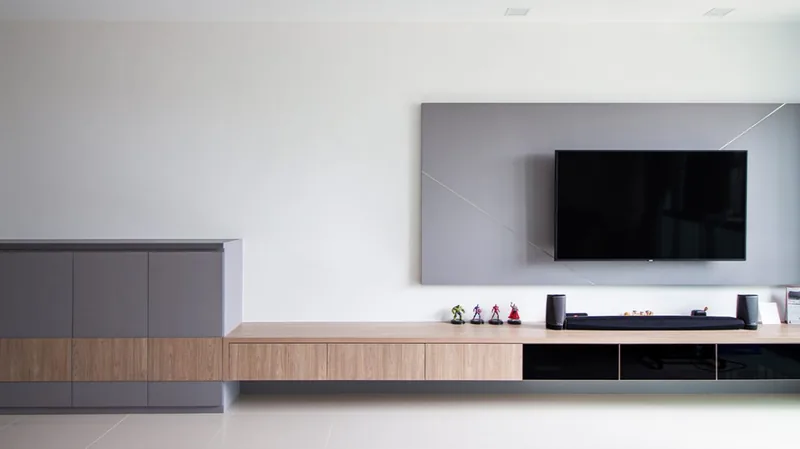
A review reliably reports what a homeowner could see and feel — responsiveness, punctuality, site tidiness, how a problem was handled — and reliably misses everything sealed behind tile, screed, plaster and false ceiling. Reviews also cluster at handover, while the failures that cost money (waterproofing, debonded tiles, swollen carcasses, condensate back-flow) surface months later. Read reviews for behaviour under pressure, then use registries, demerit records and contract terms for everything a reviewer never saw.
- What a review is genuinely good evidence for
- What a renovation contractor review in Singapore physically cannot see
- The timing problem: reviews are written at handover, defects arrive later
- What the public records say that reviews do not
- How to read a review page like a site supervisor
- Turning a review into evidence
A five-star average tells you a renovation contractor in Singapore was pleasant to deal with during the weeks in which a review gets written. Almost nothing in a star rating describes the waterproofing membrane under the shower tray, the bedding voids beneath a large-format tile, or the condensate drain sitting above a sealed false ceiling. Reviews are real evidence about real things, and the discipline is knowing which things.
What a review is genuinely good evidence for
Homeowners are excellent witnesses to conduct, and conduct is not a small matter on a renovation. Did the firm answer messages within a working day. Did the same person stay on the job after the deposit was paid. Did the site get swept, was the common corridor kept clear, were the neighbours warned before hacking started. Did anyone turn up when a defect was reported in month four. Twenty reviewers reporting the same behaviour is strong evidence, because none of it requires technical knowledge to observe.
Reviews are also good evidence about how a firm behaves once something has already gone wrong, which is the only behaviour worth predicting. A negative review describing a problem, a response and an outcome is worth more than ten positive reviews with no detail, and the firm's public reply is a free sample of how it will talk to a customer in a dispute. Check whether the reply engages with the specific complaint or recites a template.
Photographs attached to reviews carry information the text does not. Look at grout lines, silicone beads at the sink and shower, the junction between skirting and floor, door alignment across a carpentry run, and the ceiling edge where a false ceiling meets the wall. Wavering grout lines and lumpy silicone are visible in a phone photo, and they correlate with hurried finishing everywhere else on the job.
What a renovation contractor review in Singapore physically cannot see
Every consequential decision on a renovation is buried by a later trade. Waterproofing disappears under screed. Screed disappears under tile. Conduit, cabling and the earthing arrangement disappear under plaster. Aircon pipework, the condensate drain and its insulation disappear above the false ceiling. Carcass board grade disappears behind laminate. A homeowner writing a review three weeks after handover has seen none of it, and neither has the camera.
Hollow or debonded tiles are the clearest example of a defect invisible to a reviewer and obvious to a supervisor. Tapping a tile field with a small mallet finds voids in the bedding in about a minute, and a void created because a tiler spot-bedded a large tile instead of full-bedding it will not announce itself until the tile cracks under a dropped pan a year later. No review contains that information, because no reviewer tapped the floor.
Permit-gated work is equally unobservable in a review. HDB requires a permit before hacking down or constructing walls, requires layout plans, elevations, sections or details to be submitted with such applications, and states that owners of a newly built BTO flat have to wait 3 years before removing any wall or floor finishes in the toilets, per the HDB renovation guide. A glowing review of a "brand new" BTO toilet may be describing an overlay above the original finishes, which is the correct and lawful outcome in year one but is not the same job as a full hack.

The timing problem: reviews are written at handover, defects arrive later
Review volume peaks in the week the keys go back, which is the worst possible moment to assess a renovation. Wet-area failures need sustained use before they appear: a membrane with an inadequate upturn leaks after months of showering, not after the first wash. Carcass swelling under a sink needs a season of humidity and one unnoticed drip. Condensate back-flow shows up in the wettest month, not in the handover week. Timber doors bind after the flat has been lived in and air-conditioned.
Contractual protection runs on a clock shorter than several renovation failure modes. CaseTrust requires accredited renovation businesses to provide homeowners a workmanship warranty for a period of 12 months from the completion date of the works, per CASE, so a review written at month one and a warranty expiring at month twelve both sit inside the window in which the most expensive defects have not yet surfaced. A reviewer at month one cannot report whether the firm honoured a claim at month eleven.
Sort reviews by date and hunt specifically for the old ones. A review posted twelve or eighteen months after completion, describing whether anything failed and whether the firm returned, is worth more than the entire recent page. Reviewers who edit a review after a year are the most valuable witnesses available, and there are never many of them.
What the public records say that reviews do not
Complaint statistics describe the industry in a way review pages structurally cannot, because nobody posts a review after their contractor stops answering the phone. CASE recorded 787 complaints against renovation contractors in 2025, down 18.2 per cent from 962 in 2024, and reported that prepayment losses in that industry fell 73.8 per cent to $190,667 from $728,813.76 with renovation still the second-highest industry for prepayment losses, in its media release of 9 February 2026. Accreditation status correlates sharply with which firms generate those complaints:
"Of the 962 complaints received against renovation contractors, approximately 97 per cent of complaints were against non-CaseTrust accredited contractors. All complaints related to accredited contractors were successfully resolved, highlighting the importance of the safeguards brought about by the CaseTrust accreditation." — CASE media release, 6 February 2025
Regulatory standing is a record with teeth, and it updates whether or not anyone writes about it. HDB operates a demerit point system under which a registered renovation contractor accumulating at least 24 demerit points within 24 months is delisted from the Directory of Renovation Contractors, and the Directory is published as an open dataset on data.gov.sg that held 2,708 listed contractors on 9 August 2026 and is searchable by UEN or company name. CASE separately publishes a CaseTrust Watchlist alongside its list of accredited businesses, and both are worth opening before a deposit is paid.
One claim on a marketing page should end a conversation faster than any review. HDB states that it does not endorse or guarantee the quality of works of contractors listed in its Directory, and that engaging one is a private contract between homeowner and contractor, so a firm advertising that HDB has approved, certified or endorsed it is contradicting the agency it is invoking. The accurate version is narrow and checkable in a browser: Noble Interior Design Pte. Ltd. is listed in HDB's Directory of Renovation Contractors (DRC Ref: HB-12-5230A, UEN 201722629H) and is CaseTrust-accredited.

How to read a review page like a site supervisor
Ignore the average and read for specificity. A useful review names things: the estate, the flat type, the trades, a problem, a date. A review reading "professional and hassle-free, highly recommended" carries no recoverable information, and a page of them carries no more than one of them does. Reviews that name a designer but never a site supervisor often describe a job on which nobody was supervising the trades.
Check the distribution and the timing rather than the count. A cluster of reviews arriving within a few days, from accounts holding a single review each, describes a review campaign rather than a year of work. Reviews collected in exchange for a discount are not worthless, but they are a biased sample of customers happy enough to claim the discount, and a firm should say plainly if that is how its page was built.
Read the three-star reviews first, because they come from people with nothing to prove. Three-star reviewers describe trade-offs — good carpentry, poor scheduling; excellent tiling, slow defect response — and trade-offs are the actual choice on offer. Read the one-star reviews for the firm's reply, then check whether the same complaint recurs across different years, which is the difference between one bad job and a systemic gap.
Turning a review into evidence
Ask the firm for a site visit at the stage reviews never capture: after first-fix electrical and air-conditioning, before the false ceiling is boarded and before tiling begins. Chased conduit, drain falls, membrane upturns and screed levels are all visible at that moment, and a firm confident in its site work offers that visit without being pushed. Bring a small mallet to any completed reference flat and tap the floor.
Ask for the boring documents instead of more photographs. A works programme in trade order, a sample variation form, the defects list from a recent handover with the owner's details removed, and the warranty terms in writing say more about delivery than any gallery. Ask also what happens once the warranty expires.
Ask reviewers the one question their review left out. Anyone who posts publicly about a renovation is usually willing to say whether anything failed afterwards and whether the firm came back, and that single follow-up converts a static rating into evidence about the twelve months that matter most.
- CASE media release, 9 February 2026
- CASE media release, 6 February 2025
- CASE — CaseTrust accreditation for renovation businesses
- CaseTrust Watchlist
- HDB — Directory of Renovation Contractors
- HDB Directory of Renovation Contractors, open dataset on data.gov.sg
- HDB — Looking for renovation contractors
- HDB renovation guide (MyNiceHome)
Tell us the flat and when you get the keys.
You will get a written quotation with every line spelled out. Take it and compare it with anyone.
Get a quote